

 English
 中文简体
 русский

The Hidden Cost of Automation Without Coordination
Many buyers assume that a fully automated plant delivers its promised output. In practice, the gap between nameplate capacity and real output often comes down to one question: does the control system close the loop between raw materials, casting, cutting, and autoclaving, or does each stage run on its own timer? An AAC block production line with good mechanical automation but weak process control typically reaches only 60 to 70 percent overall equipment effectiveness. A well-coordinated line, by contrast, can compress pre-curing time scatter from 20 to 40 minutes down to 5 to 10 minutes and lift daily cycle count by 8 to 12 percent on the same equipment investment.
This means the depth of process automation, not the number of mechanical arms, is what converts equipment spending into actual cubic meters sold.
Why Traditional Automation Fails to Deliver Promised Capacity
Lines marketed as fully automatic often underperform because batching, casting, cutting, and autoclaving are designed as separate islands. Each station works to its own setpoints, and the handoffs between them rely on operator judgment. The result is variability that accumulates from one stage to the next.
The Raw Material Variability Trap
Sand and fly ash moisture can swing 3 to 8 percent within a single day, while manual batching introduces weighing errors of plus or minus 3 to 5 percent. Slurry density then drifts from batch to batch, and pre-curing time is set by experienced operators reading the slurry by feel rather than by measurement. Each drift compounds into scrap, uneven density, and wasted cement.
The Autoclave Starvation Problem
The autoclave is the most expensive asset on the line, yet utilization often falls below 85 percent because the cutting section runs at an unstable rhythm. When cut cakes arrive in irregular waves, the autoclave sits idle between charges. Coordinating pre-curing with the cutting schedule can raise utilization to 92 to 95 percent, spreading steam and energy costs across more output.
The Real Advances: Closed-Loop Control Versus Fixed Timers
The technical core of modern line automation is feedback. Instead of trusting a fixed recipe and a clock, the control system measures the process and corrects it continuously. Every technical improvement below matters only insofar as it changes the financial outcome for the buyer.
Online Moisture Compensation Reduces Cement Waste
Microwave or capacitance sensors read sand moisture in real time, and the PLC recalculates dry solid mass for every batch. Batching error falls from plus or minus 3 to 5 percent to plus or minus 0.5 to 1 percent. For a plant producing 200,000 m³ per year, cement overdosing alone can represent several hundred thousand in avoidable annual cost. A fully automated AAC block production line with this capability converts a variable input into a predictable one.
Closed-Loop Grinding Stabilizes Cutting Quality
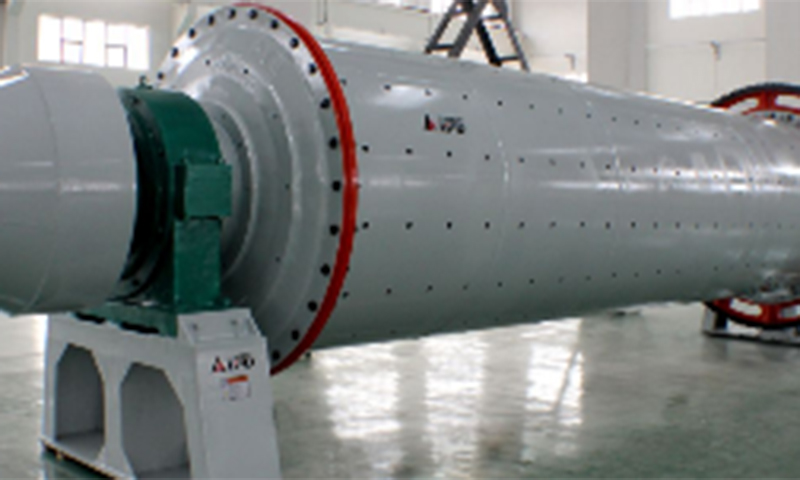
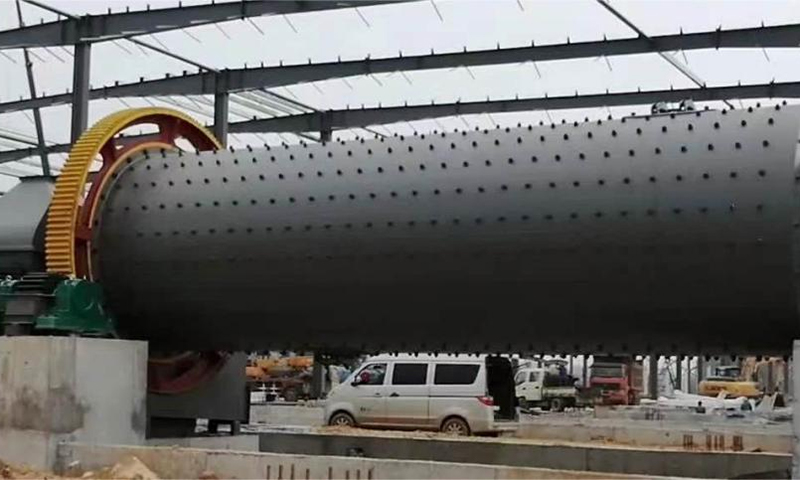
When an air classifier follows the ball mill, a PID controller can hold the Blaine fineness within a defined window. Overgrinding wastes electricity, while undergrinding weakens the mix and causes wire breaks during cutting. Holding the window tight protects both energy budget and cutting yield.
Hardness-Based Pre-Curing Replaces Watch-and-Wait Timing
Replacing a fixed timer with a penetration resistance measurement lets the PLC decide when the cake is ready to cut. The cutter, turnover table, and pre-curing chamber then exchange signals without manual intervention. This is the point where AAC block production line automation stops being a collection of machines and becomes a single process.
What This Means for Your Investment: Before and After
The table below compares a conventional manual or semi-automatic line with a closed-loop automated AAC block production line. Values reflect typical ranges reported across comparable plant designs and should be validated against each project's raw materials.
| Indicator | Manual or Semi-Automatic | Closed-Loop Automation | Meaning for the Buyer |
|---|---|---|---|
| Batching weighing error | ±3–5% | ±0.5–1% | Raw material cost becomes predictable |
| Slurry density fluctuation | ±4% | ±1% | Lower scrap rate |
| Pre-curing time scatter | 20–40 min | 5–10 min | Faster mold turnover |
| Autoclave utilization | Below 85% | 92–95% | Steam cost spread over more output |
| Daily cycle count | Baseline | +8–12% | More output from the same equipment investment |
Data basis: typical quantified impact of intelligent control on bottlenecks in AAC production lines.
How to Evaluate Whether a Supplier's Automation Is Real or Marketing
A buyer comparing proposals does not need more adjectives. They need a short set of questions that separate process control from driver-level automation. The answers should be specific, measurable, and tied to the plant's own materials.
Ask for Control Data, Not Robot Counts
Request the model and accuracy of the online moisture sensor, a written description of the closed-loop PID logic for grinding, and the method used to regulate steam valves in the pre-curing chamber. If a supplier describes only the brand of PLC and never the control strategy, the automation stops at the driver layer and has not reached the process layer.
Ask for the Autoclave Utilization Assumption
Ask how many autoclave cycles per day the proposed design achieves. A credible answer includes the cutting rhythm, pre-curing duration range, and the buffer logic between sections. Evasive answers or purely theoretical figures suggest the cutting and pre-curing sections were never designed as one system.
Ask About Predictive Diagnostics
A key marker of mature automation is fault warning before failure rather than repair after it. Ask whether the PLC records the tension curve before each wire break, and whether it can flag autoclave door seal wear before leakage stops production. These capabilities directly reduce unplanned downtime, which is often the largest hidden cost on the line.
Beyond the Line: Automation's Impact on Product Mix and Margin
Advanced control does more than reduce cost. Precise cutting and stable density let the same AAC block production line switch between standard blocks, U-shaped blocks, and lintels without quality loss. Specialty profiles often sell 15 to 30 percent above standard blocks, so the return on automation comes not only from saving money but also from selling products at better margins.
- Tighter dimensional tolerance reduces rejects on specialty profiles.
- Stable density supports consistent strength across product types.
- Faster changeovers make small product runs economical.
Conclusion: Pay for Evidence of Control, Not for the Word Automatic
Real automation progress means measurable process stability, and measurable stability produces predictable payback. Buyers should not pay a premium for the label "fully automatic." They should pay for closed-loop control backed by data.
If you are evaluating automation options for an AAC block production line, send us your target output in cubic meters per day and the type of local raw material, whether sand or fly ash. We will return a configuration based on your actual material characteristics, including projected autoclave utilization and daily cycle count, rather than a generic price list.
Frequently Asked Questions
Q1: What is the main difference between automated and closed-loop automated AAC lines?
Automated lines move material and run equipment with programmed sequences. Closed-loop lines also measure process variables such as moisture, density, and hardness, and adjust setpoints automatically to keep results stable.
Q2: How much cement can moisture compensation realistically save?
Savings depend on plant capacity, raw material moisture variation, and cement price. Reducing batching error from several percent to about one percent typically eliminates systematic overdosing, which is the main source of avoidable cement cost.
Q3: Why does autoclave utilization matter so much for payback?
The autoclave is the most expensive piece of equipment and consumes large amounts of steam. Higher utilization spreads fixed cost and energy over more cubic meters, which directly lowers cost per m³.
Q4: What should I provide to get an accurate configuration proposal?
Provide your target daily output in cubic meters, the type and moisture range of your raw materials, and your power and steam conditions. With these inputs, a meaningful utilization and cycle-count estimate can be prepared.