

 English
 中文简体
中文简体 русский
Why AAC Block Production Line Decisions Are Investment Decisions
An AAC block production line is not a single machine but an integrated manufacturing system that transforms silica sand, cement, lime, gypsum, aluminum powder, and water into autoclaved aerated concrete blocks. The line combines raw material preparation, batching and pouring, pre-curing, cutting, autoclaving, and packaging into one continuous process.
Buyers rarely ask only about machine models. They ask five harder questions: How much capital is required? How many cubic meters per year can be sold? How much labor and energy will be consumed? How stable is the equipment? And who will support the plant after commissioning? Those five questions define whether an AAC plant becomes a profitable building materials business or an underused asset.
This guide focuses on practical engineering and investment logic. It does not treat the production line as a catalog of equipment. Instead, it explains how capacity, total cost of ownership, automation, and core process sections interact, so a project owner can specify a line that matches the local market instead of overbuying or underbuilding.
What Is an AAC Block Production Line and How Does It Work?
Autoclaved aerated concrete production is a chemical and thermal process. The aluminum powder reacts in the alkaline slurry to generate millions of small pores. After pre-curing, the semi-solid cake is cut to precise dimensions. High-pressure steam in an autoclave then converts the calcium-silica compounds into stable crystalline structures. The result is a lightweight, insulating, fire-resistant block that can incorporate fly ash or other industrial by-products.
The simplified process flow is shown below.
Each stage affects the next. Poor slurry preparation causes inconsistent pore structure. Inaccurate cutting creates dimensional variation that increases mortar consumption on the construction site. An inefficient autoclave cycle raises steam cost per cubic meter. A well-designed line balances all stages instead of maximizing one machine.
How to Match AAC Production Line Capacity to Your Market
Capacity is usually expressed in cubic meters per year or cubic meters per day. Common commercial scales range from 50,000 m3/year to 500,000 m3/year. The right choice depends on local demand, transportation radius, and available capital.
| Capacity Range | Typical Daily Output | Suitable Project Profile | Key Consideration |
|---|---|---|---|
| 50,000 to 100,000 m3/year | 150 to 300 m3/day | Regional distributor or new entrant | Low capital risk, limited automation |
| 100,000 to 200,000 m3/year | 300 to 600 m3/day | City-level building materials supplier | Balanced automation and labor cost |
| 200,000 to 300,000 m3/year | 600 to 900 m3/day | Provincial supplier or export base | Higher autoclave capacity and cutting precision |
| 300,000 to 500,000 m3/year | 900 to 1,500 m3/day | Large group or multi-region distribution | Fully automatic control and redundancy |
A common mistake is to select capacity based on equipment price rather than market absorption. A 200,000 m3/year line running at 40 percent utilization loses more money than a 100,000 m3/year line running at 85 percent utilization. Before requesting a quotation, estimate the annual demand within a 150 to 300 km radius, then add a realistic growth margin of 20 to 30 percent.
Small Scale AAC Plant Versus Large Capacity AAC Production Line
A small scale AAC plant below 150,000 m3/year usually uses semi-automatic cutting and fewer autoclaves. It requires more manual intervention but has lower initial investment. A large capacity AAC production line above 300,000 m3/year typically includes automatic batching, robotic or high-precision cutting, multiple autoclaves, and centralized PLC control. The higher capital cost is justified by lower labor cost per cubic meter and more consistent product quality.
AAC Block Production Line Cost: Beyond the Equipment Quotation
The purchase price of machinery is only one part of the investment. Experienced project owners evaluate total cost of ownership over five to ten years. The table below breaks down the main cost categories.
| Cost Category | Typical Share of Initial Investment | What It Includes | Long-Term Impact |
|---|---|---|---|
| Core equipment | 35 to 50 percent | Cutter, autoclave, mixer, batching system, molds | Determines product quality and cycle time |
| Civil construction and installation | 20 to 30 percent | Foundation, workshop, power supply, piping, commissioning | Affects project timeline and safety compliance |
| Operating cost | Recurring | Electricity, steam, labor, raw materials, maintenance | Determines break-even point and profit margin |
| Hidden cost | Often underestimated | Downtime, spare parts delay, inconsistent quality, retraining | Can exceed initial equipment savings within two years |
Energy is usually the largest operating cost. Steam consumption per cubic meter depends on autoclave insulation, cycle design, and waste heat recovery. Labor cost depends on automation level. Raw material cost depends on local availability of sand, fly ash, lime, and cement. A line that uses local industrial waste can reduce raw material cost significantly.
When comparing quotations, ask for a cost model that includes annual electricity consumption, steam consumption per cycle, recommended spare parts inventory, and estimated annual maintenance hours. A lower machine price with poor after-sales response can become the most expensive choice.
Automatic AAC Block Production Line and AAC Block Making Machine Price
Automation level directly affects AAC block making machine price. A fully automatic line uses PLC and SCADA systems to control batching, cutting, and autoclave scheduling. It reduces the number of operators per shift and improves dimensional consistency. A semi-automatic line relies on manual measurement and adjustment at several stages. The price difference between the two is recovered through lower labor cost and fewer rejected blocks in most medium and large projects.
Manual, Semi-Automatic, and Fully Automatic: Which Level Fits Your Project?
Automation is not a luxury feature. It is a strategic choice that affects daily output, quality stability, and management complexity.
- Manual line: Suitable for very small capacity or trial production. High labor intensity, greater dimensional variation, and limited daily output.
- Semi-automatic line: Common for 100,000 to 200,000 m3/year. Key stages such as cutting and autoclaving are mechanized, while batching and stacking may require manual input.
- Fully automatic line: Recommended for 200,000 m3/year and above. Central control, automatic batching, high-precision cutting, and scheduled autoclave cycles reduce human error and improve capacity utilization.
The decision should consider local wage levels and the target product mix. If the project will supply high-rise construction or export markets, dimensional accuracy and batch consistency become more important than initial savings. In those cases, an automatic AAC block production line is usually the more rational investment.
Core Sections of an AAC Block Manufacturing Plant
Understanding each section helps buyers evaluate quotations and identify where cost reductions may compromise quality.
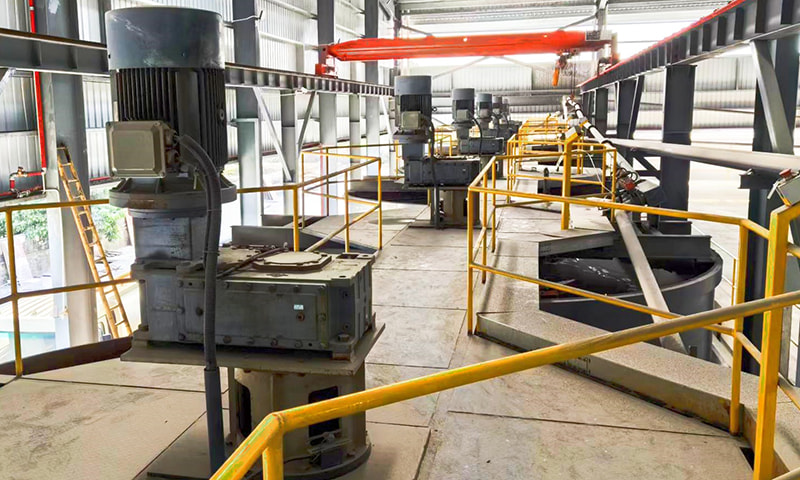
Raw Material Preparation and Batching
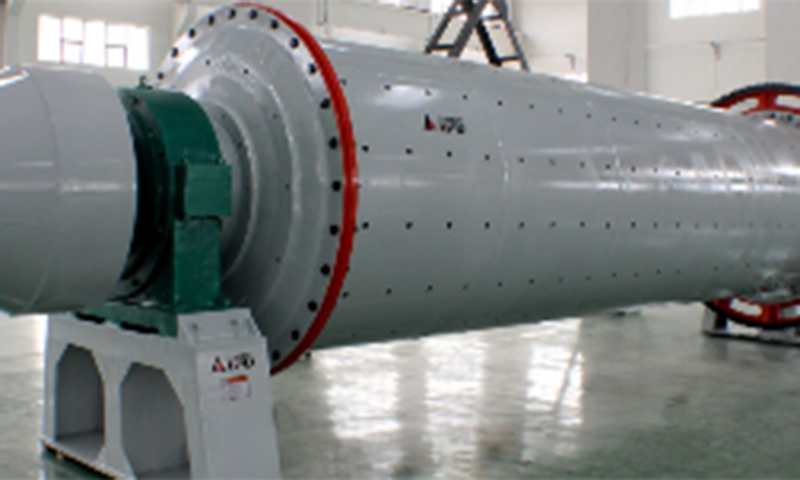
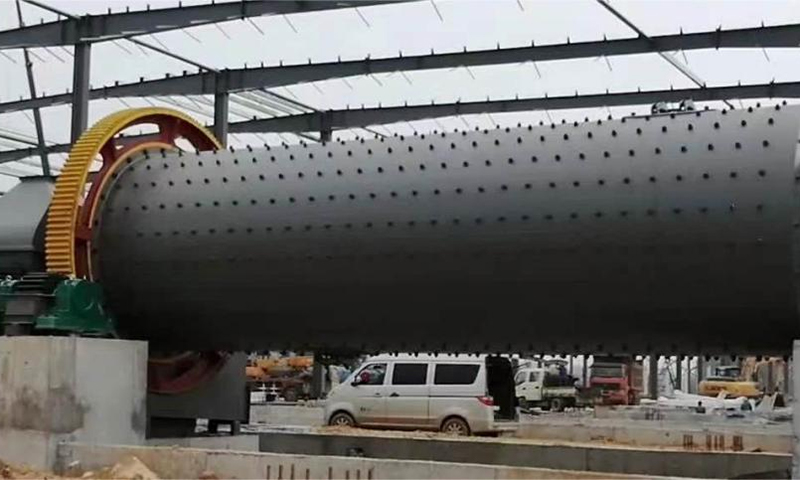
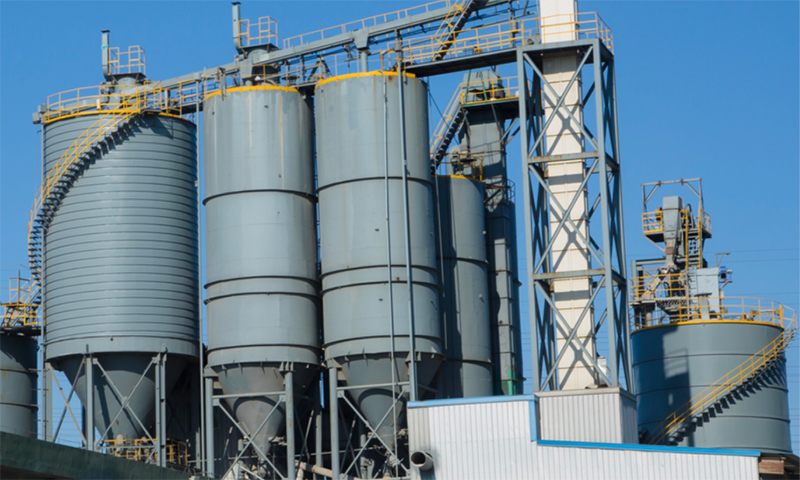
Sand or fly ash is ground and mixed with water to form slurry. Lime, cement, gypsum, and aluminum powder are dosed according to the mix design. Batching accuracy affects the foaming reaction and final strength. A plant that uses fly ash may need additional storage and feeding equipment, but can lower raw material cost.
Cutting Section: Where Dimensional Accuracy Is Created
The AAC cutting machine determines block length, width, and height tolerance. A precise cutter produces blocks with minimal dimensional variation, which reduces mortar consumption during wall construction. It also reduces waste during autoclaving and packaging. When evaluating a cutter, ask about cutting wire replacement frequency, frame rigidity, and synchronization with the pre-curing cycle.
Autoclave for AAC Production: The Heart of Strength and Energy Consumption
The autoclave for AAC production applies saturated steam under pressure to complete the hydrothermal reaction. Autoclave reliability, door sealing, insulation, and steam distribution affect both product strength and energy cost. A well-designed autoclave cycle can reduce steam consumption per cubic meter. Multiple autoclaves allow overlapping cycles and higher daily output.
Packaging and Storage
After autoclaving, blocks are cooled, separated, and packed. Automatic packaging reduces breakage and labor. Storage area design should allow proper ventilation and moisture control. Poor storage can cause surface cracks and customer complaints even when the production line itself is well operated.
What Separates a Reliable AAC Plant Supplier from a Machine Seller?
A reliable supplier provides process design, equipment manufacturing, installation supervision, commissioning, operator training, and long-term spare parts support. The difference becomes visible during the first year of operation.
- Process design capability: The supplier should adjust the recipe and equipment configuration based on local raw materials, not simply copy a standard layout.
- Manufacturing capacity: A factory area above 50,000 square meters and more than 13 years of industry experience indicate stable production capability and quality control systems.
- Quality certification: Specialized and innovative enterprise recognition, research and development capability, and documented quality management systems provide objective evidence.
- Global service record: Projects in Southeast Asia, the Middle East, or other overseas markets demonstrate the ability to handle different climates, raw materials, and grid conditions.
These factors reduce the risk of long commissioning delays, repeated equipment failures, and costly production interruptions.
Frequently Asked Questions About AAC Block Production Lines
Q1: How much does an AAC block production line cost?
Total investment depends on capacity, automation level, local construction cost, and raw material preparation requirements. A small semi-automatic line below 100,000 m3/year may require a lower initial capital, while a fully automatic line above 300,000 m3/year requires significantly more. The equipment quotation alone is not enough; request a total cost of ownership model that includes civil works, installation, energy, labor, and maintenance.
Q2: What is the minimum capacity for a profitable AAC plant?
In many markets, 50,000 to 80,000 m3/year can be profitable if local demand is stable and transportation distance is short. Below that range, fixed costs and labor may absorb too much of the margin. The key is not the theoretical minimum but the ratio of annual sales to annual capacity. A utilization rate above 70 percent is generally more important than a large nameplate capacity.
Q3: What raw materials can be used in the production line?
The main raw materials are silica sand or fly ash, lime, cement, gypsum, aluminum powder, and water. Some plants also use slag or other industrial by-products after testing. The mix design must be adjusted to local material properties such as fineness, chemical composition, and moisture content.
Q4: How long does it take to install and commission an AAC production line?
Installation and commissioning typically take several months, depending on capacity, site conditions, and civil construction progress. A small line may be installed faster than a large automatic line with multiple autoclaves. A realistic schedule should include foundation work, equipment installation, piping and electrical connections, trial production, and operator training.
Q5: What kind of after-sales support should a buyer expect?
After-sales support should include installation supervision, commissioning, operator training, process optimization, spare parts supply, and remote or on-site troubleshooting. Response time matters more than a long warranty statement. Ask for a clear service escalation process and the location of nearest service engineers.
Q6: How does automation affect product quality?
Automation improves batching accuracy, cutting precision, and autoclave cycle consistency. These factors reduce dimensional variation, density variation, and rejection rate. In medium and large plants, the labor savings and quality improvement usually justify the higher initial investment.
Q7: Can the production line use local fly ash instead of sand?
Yes, fly ash can partially or fully replace sand in many mix designs after laboratory testing. The plant layout may need additional silos, feeders, and grinding equipment. Using local fly ash can reduce raw material cost and support environmental compliance, but the mix design and curing cycle must be adjusted.
Q8: What information is needed for a preliminary proposal?
Provide the target annual capacity, available raw materials, local market price of AAC blocks, planned investment range, site conditions, and automation preference. With this information, an engineering team can prepare a preliminary process layout, equipment configuration, and investment estimate.
Get a Turnkey AAC Plant Solution Based on Your Market
A successful AAC project starts with the right capacity, a realistic cost model, and a production line that matches local raw materials and labor conditions. Whether you are planning a small regional plant or a large automatic facility, the engineering configuration should be based on your target market, not on a standard catalog.
Tell us your target capacity, available raw materials, and budget range. An engineer will prepare a preliminary proposal and equipment configuration within 24 hours.