

 English
 中文简体
中文简体 русский
The AAC block production industry has experienced significant growth over the past decade, with manufacturers constantly seeking ways to improve efficiency and output quality. An optimized AAC block production line is not merely about increasing production volume—it requires a strategic approach that balances multiple operational factors. This comprehensive guide explores practical methodologies to enhance your production line performance, reduce operational costs, and maintain consistent quality standards.
Understanding AAC Block Production Fundamentals
Autoclaved Aerated Concrete blocks represent a significant advancement in construction materials. The production process involves precise mixing, molding, cutting, and autoclaving stages that must work in perfect synchronization.
The Core Production Stages
Every automatic AAC block production line operates through several interconnected stages. The raw material preparation phase involves combining cement, lime, silica sand, aluminum powder, and water in exact proportions. Any deviation in material ratios directly impacts the final product's compressive strength and density.
The mixing stage introduces controlled air into the slurry through chemical reaction with aluminum powder. This creates millions of tiny air pockets that give AAC its lightweight yet durable characteristics. Following mixing, the material flows into molding stations where it rises and expands before being cut into standardized block dimensions.
The autoclaving process represents the most critical stage, where blocks are subjected to high pressure and steam to accelerate curing. This typically occurs at temperatures between 180 to 195 degrees Celsius over 8 to 12 hours, depending on desired strength levels.
Key Optimization Strategies for Maximum Yield
Raw Material Quality Management
The foundation of optimal production begins with rigorous material quality control. Cement should meet international standards for fineness and consistency. Silica sand requires careful sieving to maintain particle size distribution within specified ranges, typically between 75 and 150 micrometers.
Establishing relationships with reliable suppliers ensures consistency. Many manufacturers implement material batch testing protocols, analyzing samples before each production cycle. This proactive approach prevents downstream complications that could compromise final product quality or require production line shutdowns.
Precise Mixture Design and Proportioning
The chemical formulation of AAC directly influences its properties. Modern production systems employ automated batching equipment that measures each component with accuracy tolerances of plus or minus 0.5 percent. This precision eliminates human error and ensures reproducible results across production batches.
Water content requires particular attention, as excessive moisture affects curing time and final density, while insufficient water compromises the chemical reactions necessary for strength development. Many advanced systems incorporate humidity and temperature sensors that adjust water addition automatically based on ambient conditions.
Equipment Maintenance and Calibration
Production line equipment experiences continuous wear through repetitive operations. Implementing a structured maintenance schedule prevents unexpected breakdowns that disrupt production flow. Regular inspection of cutting wire tension, mold alignment, and conveyor systems ensures consistent block dimensions and reduces waste.
Calibration of measuring and mixing equipment should occur at established intervals, typically weekly or based on manufacturer recommendations. Load cells in weighing systems can drift over time, affecting material proportions. Thermometers and pressure gauges in autoclaves require periodic verification against certified standards.
Process Flow Optimization
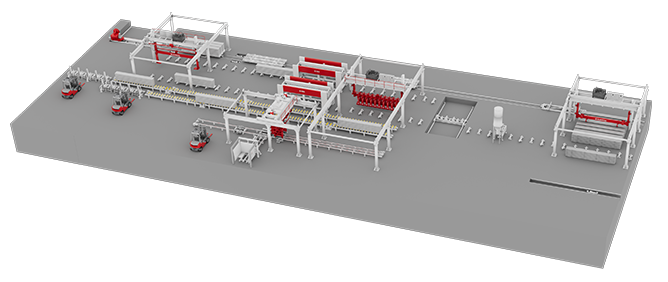
The layout of your AAC block plant directly influences production efficiency. Material should flow in a logical sequence from receiving through shipping, minimizing unnecessary transportation and handling. Production facilities that arrange equipment in a linear progression experience fewer bottlenecks compared to scattered layouts.
Identifying potential congestion points—such as limited storage capacity between production stages or insufficient cooling space after autoclaving—allows for strategic improvements. Some manufacturers expand intermediate storage areas or implement conveyor belt modifications to increase throughput capacity.
Technical Improvements and Best Practices
Automation and Control Systems
Modern AAC block manufacturing benefits significantly from automated monitoring and control systems. Programmable Logic Controllers (PLCs) manage mixing ratios, heating cycles, and material flow with minimal human intervention. These systems reduce variability and respond faster to process deviations than manual operations.
Advanced facilities implement Industrial Internet of Things (IoT) sensors throughout the production line. These devices continuously monitor temperature, pressure, humidity, and material consistency, transmitting data to centralized dashboards. Operators can identify emerging problems before they impact product quality, enabling preventive adjustments rather than reactive corrections.
Energy Efficiency Enhancements
The autoclaving stage consumes the largest portion of energy in AAC production. Improving autoclave insulation reduces heat loss during the curing process, directly decreasing energy requirements. Many facilities have upgraded to modern autoclave designs featuring superior insulation materials and more efficient steam distribution systems.
Some manufacturers have implemented waste heat recovery systems that capture steam exhausted from autoclaves and redirect it for pre-heating incoming slurry or facility heating. This approach can reduce overall energy consumption by 10 to 15 percent while maintaining production quality.
Water Recycling Systems
AAC production generates wastewater containing fine silica particles and other residues. Rather than treating and disposing of this water, progressive manufacturers have installed recycling systems. These systems filter wastewater and reintroduce it into the production process, reducing freshwater consumption and disposal costs simultaneously.
Implementing closed-loop water systems also improves environmental compliance and reduces the overall carbon footprint of operations. Facilities in water-scarce regions have reported significant cost savings through these investments.
Quality Control Enhancement
Establishing robust quality control protocols ensures consistent product performance and customer satisfaction. Random sampling should occur at multiple production stages, with testing covering compressive strength, density, thermal conductivity, and dimensional accuracy.
Many manufacturers employ statistical process control (SPC) charting to track quality metrics over time. These visual tools quickly reveal trends that might indicate developing problems, allowing technicians to make adjustments before out-of-specification batches are produced.
Strategic AAC Block Plant Layout Design
An efficient plant layout directly influences throughput, worker safety, and product quality. Several layout principles have proven effective across successful manufacturing facilities.
Linear Production Flow
The most efficient layouts arrange equipment in a linear sequence following the production process order. This minimizes material handling, reduces transportation time, and simplifies inventory management. Workers become familiar with their specific stations, improving efficiency and reducing errors.
Space Allocation Considerations
- Raw material storage areas should accommodate at least three days of production supplies to prevent production interruptions
- Mixing and aeration zones require adequate space for equipment operation and maintenance access
- Molding and cutting areas need clear pathways for equipment movement and emergency egress
- Autoclave positioning should allow for convenient block loading and unloading without congestion
- Finished product storage should separate blocks by specification to prevent mixing of different grades
Auxiliary System Integration
Beyond core production equipment, successful plant layouts integrate supporting systems strategically. Utility rooms housing compressors, boilers, and control systems should be positioned for easy access to all production areas. Loading docks should align with finished product storage to streamline shipping operations.
| Layout Element | Optimal Positioning | Efficiency Impact |
|---|---|---|
| Material Storage | Adjacent to receiving area, upstream of mixing | Reduces loading time by 20-30% |
| Mixing Equipment | Central location with direct feed to molding | Minimizes slurry transportation |
| Autoclave Placement | Positioned for balanced production flow | Prevents upstream bottlenecks |
| Inspection Station | Between autoclave and storage | Catches defects before packaging |
| Loading Dock | Aligned with product storage area | Reduces handling by 25-40% |
Addressing Common Production Challenges
Managing Batch Consistency
Achieving consistent results across production batches requires attention to multiple variables. Temperature fluctuations between seasons affect hydration reactions and curing times. Many facilities address this by installing environmental controls that maintain stable ambient conditions year-round.
Material variation also impacts consistency. Establishing strict material supplier specifications and conducting batch testing before production ensures that inputs remain within acceptable parameters. Some manufacturers maintain material test records spanning years to identify seasonal patterns and anticipate adjustments.
Reducing Production Downtime
Unplanned equipment failures disrupt production schedules and incur costly expenses. Implementing preventive maintenance programs addresses potential problems before failures occur. Tracking equipment history, including repair records and component replacement schedules, enables proactive planning.
Establishing spare parts inventory for critical components—such as cutting wire, hydraulic seals, and autoclave valves—enables rapid equipment repairs when issues arise. The investment in spare parts inventory typically recovers through reduced downtime expenses within months.
Waste Minimization Strategies
Production waste reduces yields and increases costs. Cutting operations generate the largest waste stream, as material is removed to achieve precise block dimensions. Optimizing cutting patterns through computer-aided design can reduce waste by 5 to 10 percent.
Broken or damaged blocks discovered during quality inspection represent another waste source. Implementing protective handling procedures and improving workplace training reduces breakage rates. Some facilities have reported 15 to 20 percent reductions in damage-related waste through improved material handling practices.
Measuring and Monitoring Production Performance
Key Performance Indicators
Successful AAC manufacturers track specific metrics that reveal production line health and efficiency. Overall Equipment Effectiveness (OEE) combines three factors: availability (percentage of time equipment is operational), performance (actual production rate versus theoretical maximum), and quality (percentage of defect-free products).
A typical target for mature production facilities is 85 percent OEE, with world-class operations achieving 90 percent or higher. Tracking OEE identifies which factor—availability, performance, or quality—requires improvement focus.
Throughput and Capacity Metrics
- Daily production volume in cubic meters or block count
- Average cycle time from raw material to finished product
- Equipment utilization rate as percentage of available operating time
- Production cost per cubic meter including labor and materials
- Defect rate as percentage of total output
Quality Assurance Metrics
Beyond defect rate, manufacturers should monitor compressive strength results, density variations, and dimensional accuracy. Establishing control limits—typically three standard deviations from the mean—helps identify when processes drift out of specification.
Regular testing of customer-returned products provides valuable feedback about real-world performance. Analyzing failure modes and root causes enables corrective improvements to production parameters or design specifications.
Implementation Roadmap for Optimization
Phase One: Assessment and Planning
Begin by conducting a thorough audit of current operations. Document existing equipment specifications, production schedules, quality metrics, and maintenance practices. Identify the most significant bottlenecks limiting throughput or quality. This baseline assessment enables measurement of improvement impact.
Engage with production staff during assessment activities. Operators and maintenance technicians possess valuable insights about chronic issues and potential solutions. Many successful optimization initiatives have originated from front-line worker observations.
Phase Two: Priority Identification
Analyze assessment findings to prioritize improvements by potential impact and implementation cost. Quick wins—improvements achievable with minimal investment and brief implementation timeframes—should be addressed early. These create momentum and demonstrate commitment to optimization initiatives.
High-impact improvements requiring significant capital investment should be planned systematically, potentially phased over multiple years to spread costs and operational disruption.
Phase Three: Implementation and Testing
Begin with pilot implementations on a limited production scale. Testing changes in controlled environments reduces risk of widespread disruption if adjustments prove unsuccessful. Document all changes, including timing, materials used, and resulting performance impacts.
Phase this gradually into full-scale production once pilot results confirm effectiveness. Monitor closely during initial full-scale deployment, maintaining ability to revert to previous methods if unexpected issues emerge.
Phase Four: Monitoring and Continuous Improvement
Establish ongoing monitoring protocols to verify that improvements deliver sustained benefits. Some modifications lose effectiveness over time as equipment wears or operating conditions change. Regular review of performance metrics ensures timely identification and response to emerging issues.
Create a culture of continuous improvement where staff contribute observations and suggestions regularly. Many successful manufacturing operations hold monthly or quarterly review meetings where teams assess performance against targets and identify next improvement opportunities.
Emerging Technologies in AAC Production
Artificial Intelligence and Predictive Maintenance
Advanced manufacturing facilities increasingly employ machine learning algorithms that analyze equipment performance data to predict maintenance needs. These systems learn patterns indicating equipment degradation, enabling maintenance scheduling before failures occur. Implementing predictive maintenance can reduce unplanned downtime by 30 to 50 percent.
Advanced Process Monitoring
Real-time process monitoring systems capture hundreds of data points throughout production, enabling instant identification of deviations from optimal parameters. Artificial intelligence systems can recommend corrective adjustments automatically, reducing human decision-making delays and improving consistency.
Enhanced Autoclaving Technologies
Next-generation autoclaves incorporate more precise temperature and pressure controls, reducing curing cycle times while maintaining or improving product quality. Some advanced designs employ multi-zone heating that can reduce curing time by 15 to 20 percent, directly increasing daily production capacity.
Digital Twin Technology
Digital twin technology creates virtual replicas of production systems that can be used to test modifications and predict outcomes before implementing changes in actual facilities. This allows engineers to optimize layouts, identify bottlenecks, and validate improvements virtually, reducing implementation risk and costs.
Sustainability and Environmental Considerations
Reducing Carbon Footprint
AAC production inherently generates lower carbon emissions compared to traditional concrete manufacturing. However, further improvements remain possible. Optimizing autoclave cycles reduces energy consumption, while implementing renewable energy sources for facility operations decreases reliance on fossil fuels.
Many facilities have installed solar panels to offset electricity consumption, achieving significant cost reductions while meeting sustainability objectives. Some manufacturers have achieved carbon-neutral operations through renewable energy integration and process optimization.
Raw Material Sourcing
Selecting local material sources reduces transportation emissions associated with ingredient delivery. Establishing relationships with suppliers practicing sustainable extraction methods improves overall environmental impact. Some manufacturers source recycled materials where feasible, creating circular economy benefits.
Waste Stream Management
While production waste has inherent value as recycled aggregate, minimizing waste generation remains important. Implementing circular economy approaches that capture and reuse all production byproducts reduces environmental impact and operational costs simultaneously.
Frequently Asked Questions
Q1: What is the typical return on investment for optimizing an AAC block production line?
Return timelines vary based on the specific improvements implemented. Quick-win optimizations often recover investment within 6 to 12 months through increased throughput and reduced waste. Major capital investments in equipment upgrades typically achieve full recovery within 3 to 5 years through combined benefits of increased capacity, reduced energy consumption, and improved quality that reduces customer returns and warranty costs.
Q2: How often should AAC production equipment receive maintenance?
Maintenance frequency depends on equipment type and operating intensity. Most cutting systems require monthly inspection and adjustment, while mixing equipment may need quarterly overhaul. Autoclaves typically follow manufacturer-recommended maintenance schedules, often annually for comprehensive service. Implementing condition-based monitoring through sensors can optimize maintenance timing by indicating actual equipment condition rather than relying on time-based intervals.
Q3: What production quality standards should AAC blocks meet?
AAC blocks should meet compressive strength requirements typically ranging from 3 to 6 megapascals depending on intended application. Density generally ranges from 500 to 750 kilograms per cubic meter. Dimensional tolerances usually allow variances of plus or minus 5 millimeters in length and width. International standards and local building codes specify exact requirements applicable to your region.
Q4: How can small manufacturers implement optimization without large capital investment?
Small manufacturers should prioritize low-cost improvements first, including optimizing material handling procedures, improving maintenance discipline, implementing basic process monitoring, and conducting staff training on efficient operations. Many significant efficiency gains result from procedural changes rather than equipment investments. Once basic practices are optimized, capital investments in automation or equipment upgrades become more justified.
Q5: What is the average cycle time for AAC block production from raw materials to finished product?
Typical cycle time ranges from 20 to 30 hours depending on desired block strength and facility design. This includes material mixing (0.5 to 1 hour), molding and rising (2 to 4 hours), cutting (1 to 2 hours), and autoclaving (8 to 12 hours). Storage and handling time between stages adds additional duration. Optimizing cycle time requires improving efficiency at each stage while maintaining quality standards.
Q6: How does ambient temperature affect AAC production and what adjustments are necessary?
Ambient temperature affects hydration rates, curing speed, and final product properties. Cold environments slow chemical reactions, requiring longer curing times or adjustments to material ratios. Hot, dry climates accelerate curing but can create uneven density distribution. Successful facilities in extreme climates implement environmental controls such as heated or cooled storage areas, humidity management systems, and adjusted autoclaving parameters to maintain consistent results year-round.
Q7: What training should production staff receive to support optimization initiatives?
Staff training should cover equipment operation procedures, quality inspection methods, preventive maintenance tasks, and safety protocols. Cross-training operators on multiple production stages increases flexibility and reduces impact of absenteeism. Supervisory staff benefit from training in statistical process control, problem-solving methodologies, and continuous improvement principles. Investing in staff development typically returns value through improved efficiency and reduced errors.
Q8: How does AAC block production line optimization affect product quality and performance?
Properly optimized production lines typically improve product quality through more consistent material proportions, better process control, and improved quality inspection procedures. Optimized facilities often report reduced compressive strength variation, better dimensional consistency, and improved thermal properties compared to pre-optimization operations. Enhanced quality typically leads to increased customer satisfaction, reduced returns, and higher market prices.