

 English
 中文简体
中文简体 русский
Manual and Automatic AAC Manufacturing: Two Paths, One Goal
Producers evaluating a new AAC block production line face a fundamental choice early in planning: how much of the process should run on manual labor versus automated control systems. This decision shapes output consistency, labor cost structure, and long-term maintenance demands. Both approaches can produce compliant autoclaved aerated concrete, but the operational realities differ sharply once a plant moves past pilot-scale output.
This article breaks down where manual and automatic systems diverge across the full production sequence, from raw material batching through autoclaving and cutting, so plant planners can weigh efficiency against capital investment with clearer expectations.
What an AAC Block Plant Actually Involves
An AAC plant is not a single machine but a coordinated sequence of stations. Raw materials are proportioned, mixed into a slurry, poured into molds, allowed to rise and pre-cure, cut into blocks or panels, then hardened in a high-pressure steam autoclave. Efficiency depends on how tightly these stages are synchronized, and that synchronization is where manual and automatic setups begin to differ.
Core Stages in Sequence
- Raw material storage and proportioning
- Slurry mixing and chemical dosing
- Pouring into molds
- Pre-curing and rising
- Demolding and cutting
- Autoclave curing under steam pressure
- Unloading, sorting, and stacking
Manual vs Automatic: Side-by-Side Comparison
The table below outlines where the two approaches typically diverge across common operational metrics observed in mid-to-large scale plants.
| Parameter | Manual-Dominant System | Automatic System |
|---|---|---|
| Batching accuracy | Depends on operator consistency | Controlled by weighing sensors |
| Cutting precision | Variable, higher rework rate | Uniform dimensions, low rework |
| Labor requirement per shift | Higher headcount | Reduced headcount, more supervisory roles |
| Daily output stability | Fluctuates with fatigue and skill gaps | Consistent across shifts |
| Initial capital cost | Lower | Higher |
| Long-term operating cost | Higher due to labor and waste | Lower per unit over time |
| Startup training time | Shorter | Longer, requires technical training |
How an AAC Block Manufacturing Process Differs by Automation Level
Batching and Mixing
In manual operations, raw material ratios are often measured using fixed containers or operator judgment, which introduces variability between batches. Automated AAC production equipment uses load-cell weighing and programmable dosing to hold proportions within tight tolerances, which directly affects the strength and density consistency of finished blocks.
Pouring and Rising
Pouring speed and mold filling uniformity influence how evenly the aeration reaction develops. Manual pouring can create uneven rise patterns across a mold, leading to density variation within a single block. Automated pouring carriages move at controlled speeds and angles, producing a more uniform cellular structure.
Cutting Accuracy
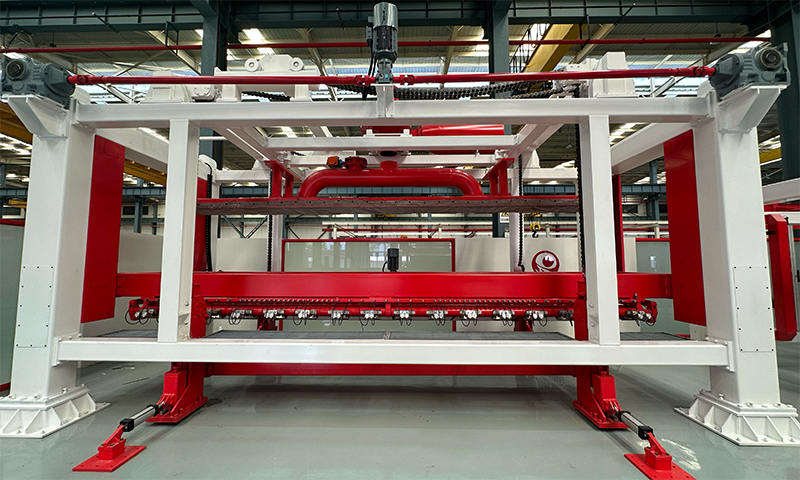
Cutting is where the difference becomes most visible to end users. Manual wire-cutting setups depend heavily on operator skill and are more prone to dimensional drift over a production run. Automatic cutting machines follow programmed coordinates, holding tolerances that reduce the volume of off-spec blocks sent for rework or downgrading.
Autoclaving Control
Autoclave cycles require precise pressure and temperature curves. Manual valve operation risks under- or over-curing, both of which affect final compressive strength. Automatic systems use programmable logic to follow a fixed curing curve, improving repeatability across cycles.
Process Flow Comparison Diagram
The diagram below illustrates how control points shift from operator-driven to sensor-driven stages as a plant moves toward automation.
What Equipment Is Included in an AAC Plant
Whether operating manually or with automation, the core equipment categories remain similar. What changes is the level of instrumentation attached to each unit.
Raw Material Handling
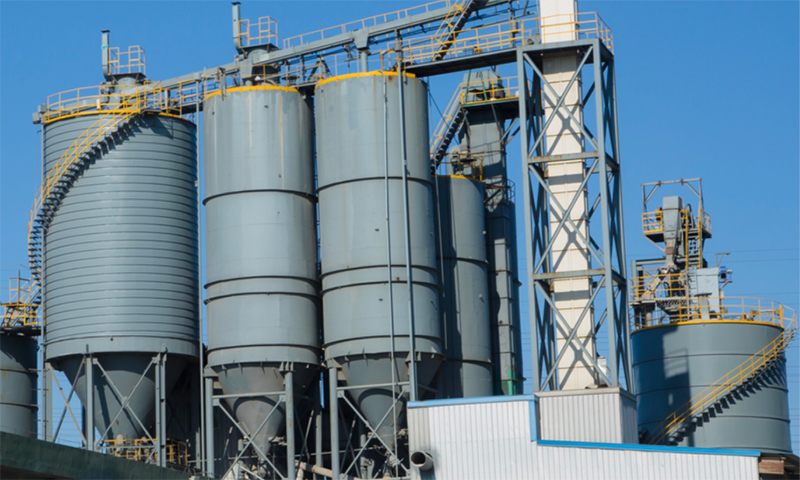
Storage silos, conveyors, and dosing systems for lime, cement, sand or fly ash, gypsum, and aluminum powder.
Mixing System
High-shear mixers that blend slurry to a consistent viscosity before pouring.
Mold and Pouring System
Molds on rails or fixed stations, paired with pouring carriages of varying automation levels.
Cutting Machine
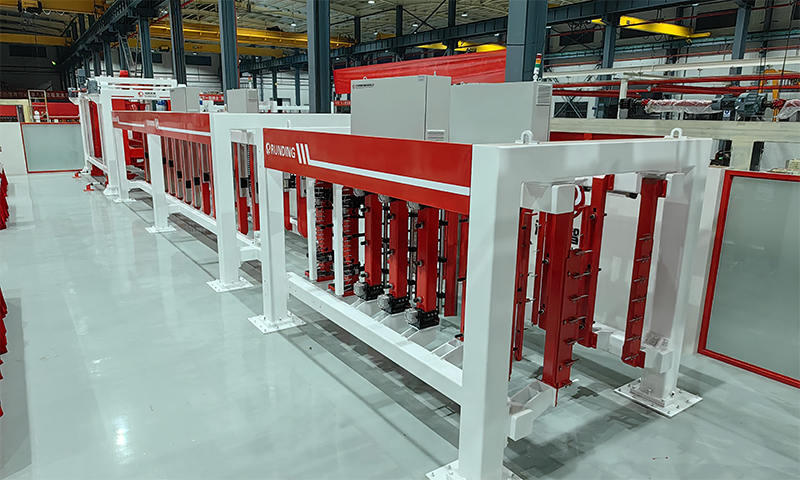
Wire-cutting frames that shape green cake into blocks or panels before curing.
Autoclave
Pressure vessels that cure blocks under steam, developing final strength.
Handling and Stacking
Cranes, transfer carts, and stacking systems for finished block movement.
Raw Materials Used in AAC Block Production
Material handling accuracy matters regardless of automation level, since proportioning errors affect density and strength consistency.
- Fly ash or silica sand as the primary siliceous material
- Cement as a binding agent
- Lime for chemical reaction and strength development
- Gypsum to regulate setting time
- Aluminum powder as the aerating agent
- Water for slurry consistency
The proportioning of these inputs determines the final density class of the block, which in turn affects thermal insulation and load-bearing performance.
Capacity Considerations for an AAC Block Production Line
Output capacity is usually expressed in cubic meters per year and depends on mold size, autoclave cycle time, and how many stages run in parallel. Automated lines tend to sustain higher effective capacity because they reduce downtime caused by manual handling errors and inconsistent cutting.
| Plant Scale | Typical Annual Capacity Range | Common Automation Level |
|---|---|---|
| Small | Up to 50,000 cubic meters | Mostly manual with partial mechanization |
| Medium | 50,000 to 150,000 cubic meters | Mixed manual and automatic stations |
| Large | Above 150,000 cubic meters | Highly automated with centralized control |
How Much Does an AAC Block Production Line Cost
Cost varies widely based on capacity, automation level, and regional equipment sourcing. Rather than citing fixed figures that quickly go stale, it is more useful to understand the cost drivers.
Capital cost scales with automation, but so does long-term output stability. The tradeoff is upfront investment against reduced rework and labor variability over years of operation.
- Mold size and number of mold sets directly affect batch throughput and cost
- Autoclave size and quantity determine curing capacity and are a major cost component
- Level of instrumentation and control systems adds cost but reduces long-term variability
- Material handling automation reduces labor cost but increases initial mechanical investment
Efficiency Factors Beyond Automation Level
Automation is not the only lever for efficiency. Several operational factors affect output quality and consistency regardless of how automated the line is.
Operator Training
Even automated systems require skilled operators to manage recipe adjustments, troubleshoot sensor faults, and maintain calibration schedules.
Maintenance Discipline
Cutting wires, mold surfaces, and autoclave seals degrade with use. Consistent maintenance scheduling affects output quality as much as the initial automation level.
Recipe Adjustment for Local Materials
Raw material quality varies by region. Plants that fine-tune mix ratios for local fly ash or sand characteristics tend to achieve more stable density outcomes than those running fixed recipes.
Choosing Between Manual and Automatic for a New AAC Manufacturing Plant
The right choice depends on production targets, labor market conditions, and capital availability. A useful way to frame the decision is through the following priorities.
Many operators start with a semi-automatic AAC block plant configuration, automating the highest-impact stages such as cutting and autoclave control while keeping material handling manual, then expand automation as output demand grows.
Frequently Asked Questions
Q1: What is an AAC block production line?
It is a coordinated set of equipment and process stages, from raw material batching through mixing, pouring, cutting, and autoclave curing, used to manufacture autoclaved aerated concrete blocks or panels.
Q2: How does an AAC block plant work?
Raw materials are proportioned and mixed into a slurry, poured into molds where an aeration reaction causes the mixture to rise, then cut into shape before being cured under steam pressure in an autoclave to reach final strength.
Q3: How much does an AAC block production line cost?
Cost depends on capacity, mold configuration, autoclave size, and automation level. Larger capacity and higher automation both increase upfront investment but can lower long-term per-unit production cost.
Q4: What equipment is included in an AAC plant?
Core equipment typically includes raw material storage and dosing systems, mixers, molds and pouring carriages, cutting machines, autoclaves, and handling or stacking systems.
Q5: What are the raw materials for AAC blocks?
Common inputs include fly ash or silica sand, cement, lime, gypsum, aluminum powder as an aerating agent, and water.
Q6: What is the capacity of an AAC block production line?
Capacity ranges widely, from smaller plants producing tens of thousands of cubic meters annually to large facilities exceeding 150,000 cubic meters per year, depending on mold count, autoclave size, and automation level.