

 English
 中文简体
中文简体 русский
Defining What a Truly Fully Automated AAC Factory Looks Like
Demand for high-quality autoclaved aerated concrete blocks keeps rising across residential, commercial and infrastructure projects worldwide. At the same time, labor costs continue to climb in many manufacturing regions, and skilled operators for heavy process equipment are harder to recruit and retain. Together, these pressures have turned full automation from a luxury into a practical requirement for anyone planning a new plant.
Yet many buyers discover after commissioning that their so-called automatic line still depends on a large crew to move green cakes, adjust cutting parameters and load autoclave cars. The gap between a semi-automated installation and a genuine smart factory is wide, and it is usually found in the details of the control logic, handling equipment and maintenance tools.
A genuinely smart AAC block production line typically includes a distributed control system that coordinates batching, casting, cutting, curing and stacking from one screen. It also includes automated green cake transfer, unattended cutting sequences, autoclave programs that run without manual intervention, and remote diagnostics that let engineers resolve faults without traveling to the site.
The first step in selection is not comparing prices. It is defining the intelligence level your factory must reach, because every other decision flows from that target.
Seven Critical Factors That Determine Long-Term Value
Investment decisions in this equipment category are best organized by their impact on return. The seven factors below move from raw input to output, and each one can either protect or erode your margin for the next decade.
- Raw material adaptability and mix design
- Cutting precision and cutting method
- Autoclave energy efficiency and safety interlocks
- Control system intelligence and remote operation
- Capacity planning and modular expandability
- Hidden cost structure and total cost of ownership
- Supplier service depth and proven regional references
Factor One: Matching the Line to Your Raw Materials
Why Raw Material Determines the Equipment Specification
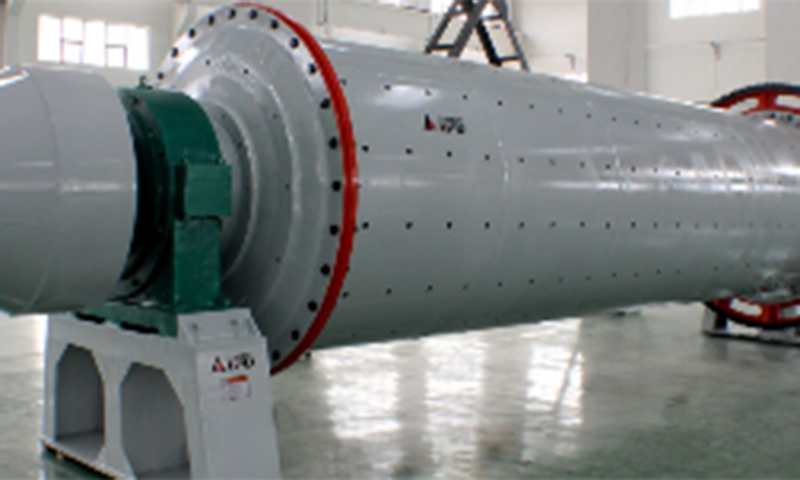
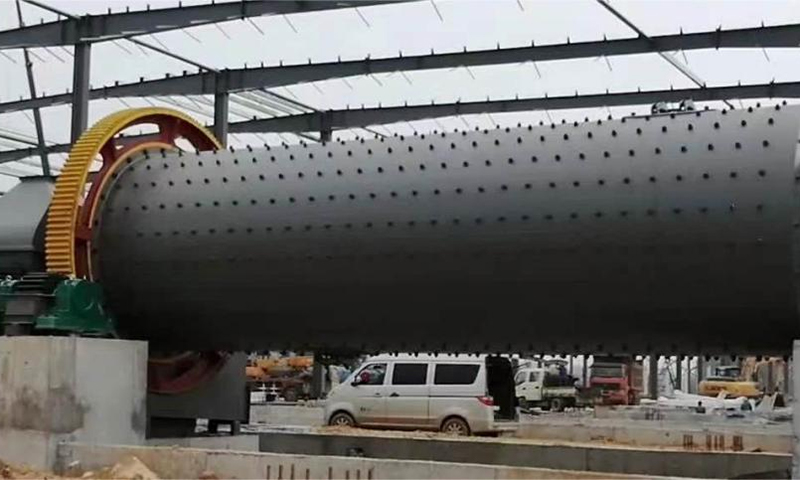
Fly ash, sand and tailings each behave differently in the ball mill, the batching system and the casting stage. Fly ash often requires a different grinding fineness and slurry density than quartz sand, and tailings may carry variable moisture and particle distribution that demands more robust feeding equipment. A line designed for one material can struggle badly with another.
For a fly ash AAC block production line, the proportioning system should hold metering accuracy within about 0.5 percent for each ingredient. Anything looser causes density drift across batches, which becomes visible in compressive strength variation and in the rate of rejected blocks.
Choosing equipment before testing your actual raw materials is the most common and most expensive mistake. Retrofitting grinding, dosing or casting systems later often costs more than the original difference in purchase price.
Factor Two: Cutting Precision Is the Dividing Line
Cutting is where a smart factory separates itself from a conventional one. Dimensional accuracy determines how many blocks can be sold as first-grade product, and it also decides whether the plant can move into higher-value thin-bed products. A well-engineered cutting section can reach a qualified-product rate of 98 percent or higher, while a poorly matched one may fall well below that figure and consume a disproportionate share of labor.
Comparing Cutting Methods
| Criteria | Turnover Cutting | Horizontal Cutting |
|---|---|---|
| Cutting orientation | Cake is rotated after cutting | Cake is cut in its original position |
| Surface quality | Good for standard blocks | Smoother faces, suited to thin-bed products |
| Automation fit | Mature, widely deployed | Easier integration with robotic handling |
| Typical application | Mainstream block production | High-precision and specialty panels |
Positioning technology matters as much as the cutting mechanism itself. Laser-guided positioning combined with wire-based cutting reduces dimensional deviation and limits waste from the cake edges. For a plant intending to produce ALC panels or other high-value products, this combination is effectively a requirement rather than an option.
Factor Three: Autoclave Energy Efficiency and Safety
Curing is the most energy-intensive stage of the process, so the autoclave system deserves close financial scrutiny. Operating pressure, vessel insulation and heat recovery all shape the energy bill for years. Pressure ratings such as 1.3 MPa versus 1.5 MPa change both the curing profile and the equipment cost, and buyers should match the rating to the product mix and the curing recipe rather than defaulting to the highest specification.
Heat recovery deserves particular attention. Systems that capture condensate and exhaust heat for preheating water or drying materials can lower fuel consumption meaningfully over the plant's life. Ask suppliers to show projected energy use per cubic meter of finished product, based on a stated curing schedule.
In a high-temperature, high-pressure environment, safety interlocks are not optional accessories. They are the baseline that protects people, equipment and the production schedule.
- Pressure and temperature interlocks that halt the cycle automatically on abnormal readings
- Door safety sensors that prevent opening under pressure
- Redundant relief and monitoring devices with logged alarm history
- Insulation specifications that limit surface temperature and heat loss
Factor Four: The Intelligence of the Control System
PLC Versus DCS in a Full Plant
A programmable logic controller handles individual machines well, but a smart plant needs a higher-level architecture that coordinates batching, casting, cutting, autoclaving and warehousing in one data environment. A distributed control system provides that coordination, along with recipe management, production reporting and alarm consolidation across all stations.
The most useful capability for overseas operations and for regions with limited skilled labor is remote diagnostics. When a supplier can view live equipment status, read alarm logs and guide local technicians through repairs, downtime shrinks dramatically. Some suppliers also offer digital twin models or virtual reality training modules, which allow maintenance teams to rehearse procedures before performing them on the real machine.
Fault Self-Diagnosis
Equipment flags the failing component and suggests the corrective step.
Remote Operations
Engineers review status and parameters without traveling to the site.
Digital Twin Training
Maintenance teams practice procedures on a virtual model first.
Production Analytics
Batch data, energy use and yield are tracked for continuous improvement.
Factor Five: Capacity Planning and Expandability
A common trap is buying a line that barely meets the initial output target. Market demand usually grows once a plant proves its product quality, and a line without room to expand forces an expensive second project. A practical approach is to choose a modular layout that starts at a moderate capacity, such as 50,000 cubic meters per year, while reserving space, utilities and control architecture for growth toward 100,000 or 200,000 cubic meters.
| Planning Item | Minimum Expectation | Smart Expansion Approach |
|---|---|---|
| Initial output | Meets first-year sales target | Moderate start with clear upgrade path |
| Site layout | Fits current production area | Reserved zones for additional casting and curing |
| Control system | Runs current stations | Scalable architecture with spare capacity |
| Utilities | Covers current demand | Sized for second-phase expansion |
Looking Beyond the Equipment Price
Understanding Total Cost of Ownership
The equipment quotation is only part of the financial picture. Energy consumption, spare parts, maintenance labor, downtime and training all accumulate over the operating life of the plant. When comparing AAC block production line offers, a total cost of ownership view over five to ten years usually reveals differences that the initial price conceals.
Questions to Ask Every Supplier
- Does the supplier maintain a spare parts warehouse in or near your target market, and what is the guaranteed response time?
- Can the supplier provide a turnkey service covering plant layout, installation, commissioning and operator training?
- Are there reference plants in your region, using similar raw materials, with verifiable production data?
- Does the proposed layout minimize logistics distance, such as a U-shaped flow that shortens transfer paths?
Reference visits are among the most reliable due diligence steps available. Ask to see running plants that share your climate, raw material and target product, and request production logs rather than brochure claims.
Budgeting With a Realistic Price Range
Buyers searching for pricing understandably want a sense of scale before making contact. Investment levels vary widely with capacity, automation depth and cutting technology. Modular lines of modest capacity generally sit at the lower end of the range, while large fully automatic smart lines with advanced cutting, digital control and heat recovery require significantly larger budgets. The final figure depends on raw material characteristics, site conditions and the level of automation chosen, so a precise quotation always follows a technical review.
| Plant Profile | Typical Automation | Budget Driver |
|---|---|---|
| Modular entry-level line | Semi-automatic casting and cutting | Capacity and basic controls |
| Mid-scale automated line | Automatic handling with DCS | Cutting precision and autoclave size |
| Large smart factory | Fully automatic with remote operation | Digital control, heat recovery and layout |
Conclusion: Choosing a Long-Term Partner
Selecting the right AAC block production line is ultimately about choosing a partner who will support your plant for many years. The best decisions come from matching the line to your materials, defining your intelligence target, planning for growth and evaluating the supplier's service capability alongside the machinery.
Request a Tailored Plan for Your Factory
Share your raw material type, target annual capacity and preferred automation level. In return, you can receive a customized factory layout design, a raw material suitability assessment and a detailed ROI estimate based on your local conditions.
Frequently Asked Questions
Q1: How much raw material testing should I do before choosing a line?
Testing at least one representative batch of each raw material is strongly recommended. Results reveal grinding requirements, moisture behavior and expected strength, which together determine the right equipment configuration.
Q2: Is a fully automatic line always the best choice?
Not necessarily. Full automation delivers the greatest benefit at higher volumes and where labor is scarce or expensive. Smaller projects may achieve better returns with a modular semi-automatic design that can be upgraded later.
Q3: What should I look for in remote diagnostics?
Look for live status monitoring, alarm history, secure remote access and the ability for technicians to guide on-site staff step by step. Training support for local teams is equally important.
Q4: How long does a typical plant take to commission?
Timelines depend on site preparation, equipment scope and utility readiness. A clear project schedule agreed in advance, with defined milestones for installation, trial production and operator training, helps keep commissioning on track.