

 English
 中文简体
中文简体 русский
An AAC block production line is not a collection of standalone machines. It is an integrated process in which grinding fineness, batching accuracy, pouring temperature, cutting tolerance, and autoclave curves must work together. A weakness in any single stage propagates through the entire line and shows up as density variation, cracking, or dimensional rejection. This article follows the full technical chain from raw material preparation to finished product handling, and closes with a practical supplier evaluation checklist for buyers who need to compare AAC block plant proposals on engineering substance rather than price alone.
What Makes an AAC Block Production Line Different from Conventional Block Making
Conventional concrete block production relies on vibration and compaction to densify a cement-bound mix. Autoclaved aerated concrete follows a different physical and chemical route. The volume of the finished block is created by a gas-forming reaction inside the mix, and the final strength is developed in a pressure vessel rather than through simple hydration at ambient temperature.
Two Defining Mechanisms
- Gas foaming: An aluminum-based agent reacts in an alkaline slurry and generates gas bubbles that expand the mix into a porous green body.
- Autoclave curing: The cut green body is cured under saturated steam pressure, where calcium silicate hydrates form and give the material its final crystalline strength.
Resulting Material Advantages
- Dry density typically between 400 and 800 kg/m3, which reduces structural dead load.
- Thermal conductivity substantially lower than dense concrete, improving building energy performance.
- High volume utilization of industrial by-products such as fly ash, slag, and mine tailings.
These advantages are only realized when the AAC block production line is engineered as a synchronized system. A high-quality autoclave cannot compensate for poor batching discipline, and a precise cutting system cannot rescue a green body that was poured at the wrong temperature.
Stage 1: Raw Material Preparation as the Quality Foundation
Quality in an AAC production line is determined before the mixer is ever filled. Particle size distribution, chemical activity, and dosing consistency at this stage set the ceiling for everything that follows.
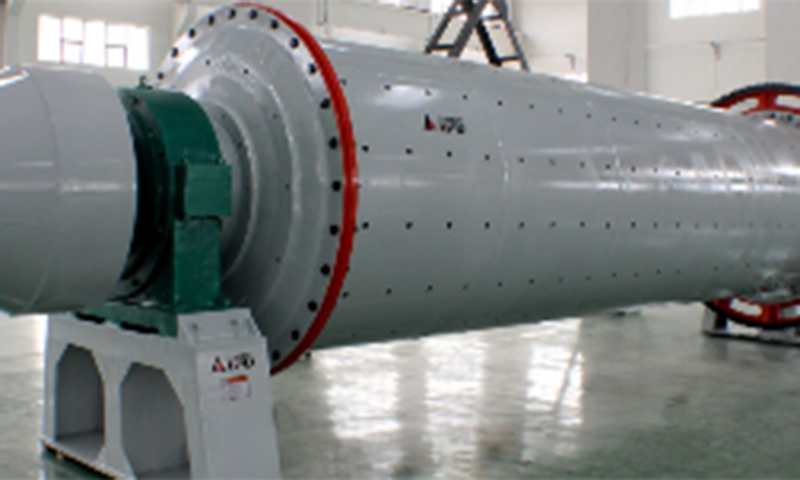
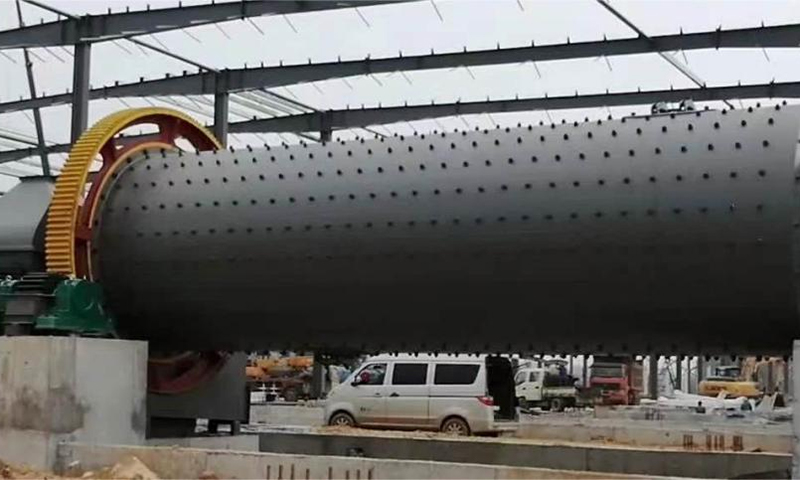
Siliceous Material Grinding
Fly ash or sand provides the silica source. Grinding fineness directly affects the reactivity of the mix and the final strength development.
- Target fineness: 200 to 300 mesh.
- Residue on sieve: less than 15 percent.
- Ball mill energy consumption is a major operating cost and should be evaluated against throughput and fineness targets.
Calcium Material Preparation
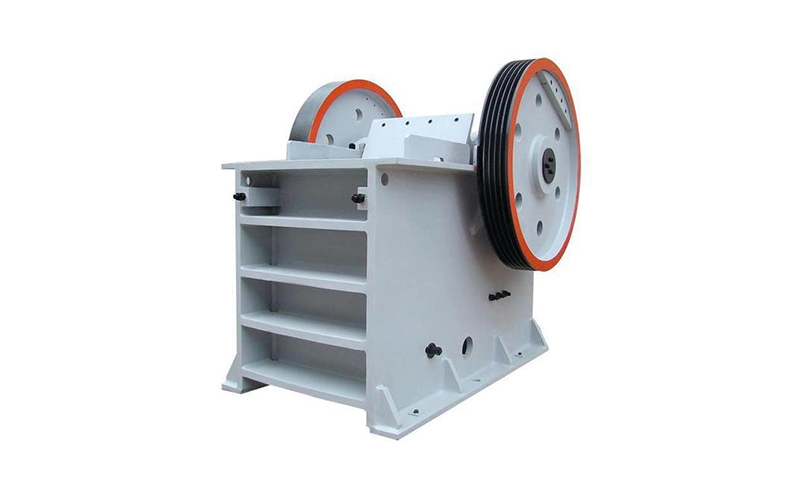
Quicklime is crushed and ground to an active, consistent powder. CaO content should be controlled at 85 percent or higher. Variations in lime activity shift the foaming window and cause density fluctuation across the production batch.
Aluminum Agent Dosing
The aluminum-based foaming agent is used in very small quantities, but its dosing precision is critical. A deviation of plus or minus 0.1 percent can move the finished density outside specification. In a well-designed AAC block plant, the aluminum dosing circuit is isolated, temperature-controlled, and verified by weight feedback.
Iron Removal and Material Handling
Magnetic separation with a removal rate of 99 percent protects mills, pumps, and cutting wires from metallic debris. Inconsistent feeding from the raw material yard creates downstream batching errors that no control system can fully correct.
Stage 2: Batching and Mixing Under Precision Discipline
Batching is where the theoretical mix design meets real material behavior. Small errors in weighing or sequencing produce large errors in the final product. A disciplined AAC block production line treats batching as a controlled process, not a manual loading operation.
PLC-Controlled Automatic Weighing
Modern AAC production lines use PLC-controlled weighing systems with an accuracy standard of plus or minus 0.3 percent. This applies to silica material, lime, cement, gypsum, aluminum agent, and water. Each scale should have independent calibration records and automatic compensation for material buildup.
Slurry Temperature Control
Pouring temperature is typically controlled between 40 and 45 degrees Celsius. This range supports uniform gas formation and consistent setting behavior. If the slurry is too cold, foaming is slow and uneven. If it is too hot, the mix can set before the gas reaction is complete.
Mixing Time and Uniformity
Mixing time must be long enough to disperse the aluminum agent uniformly, but not so long that the reaction begins inside the mixer. In practice, the mixing cycle is defined by the reactivity of the lime and the volume of the batch.
Consequences of Loose Batching Discipline
- Density variation between batches increases.
- Rejection rates rise at the cutting and autoclave stages.
- Autoclave cycle times become inconsistent, wasting steam.
A batching error of a few tenths of a percent in the aluminum agent can translate into a density shift that affects the structural and thermal performance of the entire production lot.
Stage 3: Pouring, Foaming, and Pre-Curing Variables That Decide the Outcome
After mixing, the slurry is poured into molds where the foaming reaction and initial setting occur. This is a time-sensitive stage with narrow operating windows.
The Foaming Reaction
The aluminum agent reacts in the alkaline slurry and generates gas bubbles. These bubbles expand the mixture to several times its original volume and create the porous structure that defines autoclaved aerated concrete. The reaction rate depends on temperature, alkalinity, and the fineness of the aluminum agent.
Pre-Curing Time Window
The green body must reach sufficient hardness before it can be demolded and cut. The pre-curing window is a balance:
- If the body is demolded too early, it lacks strength and collapses or deforms.
- If it is demolded too late, the body becomes too hard and can block or overload the cutting station.
Ambient Temperature and Humidity
Workshop temperature and relative humidity affect surface drying and hardness development. In cold climates, pre-curing rooms may require heating. In hot and dry conditions, surface moisture loss can cause crusting that interferes with cutting quality.
Practical Control Points
- Record the pouring temperature for every mold.
- Monitor the rise height of the foaming mix.
- Use a penetration test or hardness probe before demolding.
- Maintain a stable pre-curing environment rather than relying on operator judgment.
Stage 4: Cutting Precision That Determines Yield
Cutting converts the large green body into blocks of final dimensions. The accuracy of this stage directly affects material yield, autoclave loading efficiency, and the amount of recyclable waste.
Longitudinal and Cross Cutting
Modern AAC block production lines use a combination of longitudinal and cross cutting. The green body first passes through vertical wire cutting, then through horizontal wire cutting. Each axis must be independently controlled so that dimensional tolerances remain within plus or minus 1 millimeter.
Cutting Wire Management
Wire tension, wear, and replacement intervals are critical. A worn wire produces wider kerfs, increases waste, and can leave rough surfaces. Scheduled replacement based on production volume is more reliable than replacement based on visual inspection alone.
Waste Recovery
Cutting generates green waste that can be returned to the mixer. A well-designed recovery system can reuse up to 95 percent of this material, reducing raw material consumption and disposal costs.
| Parameter | Target | Impact of Deviation |
|---|---|---|
| Cutting tolerance | plus or minus 1 mm | Dimensional rejection, poor joint fit |
| Wire replacement | Based on volume | Rough surface, increased kerf loss |
| Waste recovery | Up to 95 percent | Higher raw material cost |
Stage 5: Autoclave Curing and the Final Transformation
Autoclave curing is the stage where the green body becomes a finished AAC product. The pressure and temperature profile determines crystalline structure, strength, and dimensional stability.
Pressure and Temperature Curve
Typical autoclaving conditions are 1.2 MPa saturated steam pressure and approximately 188 degrees Celsius. The cycle has three phases:
- Pressure rise: Gradual increase to avoid thermal shock and cracking.
- Constant pressure: The period during which calcium silicate hydrates form and strength develops.
- Pressure release: Controlled reduction to prevent rapid expansion and internal stress.
Energy Optimization
Steam consumption is one of the largest operating costs in an autoclaved aerated concrete production line. Heat exchangers that recover waste steam can return up to 70 percent of the energy to the next cycle, reducing boiler load and overall energy cost.
Common Autoclave Defects
- Cracking from too-fast pressure rise.
- Incomplete strength development from insufficient constant-pressure time.
- Surface damage from rapid pressure release.
Stage 6: Finished Product Handling, Inspection, and Packaging
After autoclaving, the product must be separated, inspected, and prepared for transport. Rough handling at this stage can damage edges and corners, turning a technically sound product into a rejected one.
Separation and Lifting
Because AAC blocks are autoclaved in large cakes, they must be separated into individual blocks. A cake splitting machine and finished product lifting equipment work together to separate the layers without shock loading. The synchronization of these two systems determines edge quality.
Inspection Standards
| Property | Typical Standard |
|---|---|
| Compressive strength | 3.5 MPa or higher |
| Dry density | 400 to 800 kg/m3 |
| Dimensional tolerance | Within specified limits |
Packaging and Edge Protection
Packaging protects the product during storage and transport. Edge protectors, strapping tension, and pallet stability should be specified so that the product arrives at the construction site without chipping. For export orders, moisture protection may also be required.
How to Evaluate an AAC Block Production Line Supplier
Supplier evaluation is the point where technical content becomes a purchasing decision. The goal is not to find the lowest price, but to identify a supplier whose engineering capability matches the long-term operating requirements of the plant.
Technical Capability Verification
- Does the supplier have an in-house PLC programming team?
- Does the supplier operate CNC machining equipment for critical components?
- Can the supplier provide a complete process flow diagram, control schematic, and material balance table?
- Does the supplier have experience with the specific raw materials available at your site?
Key Operating Indicators
| Indicator | Benchmark |
|---|---|
| On-time delivery rate | 97 percent or higher |
| Response time | 2 hours or less |
| Repeat purchase rate | Track record of returning customers |
Documents to Request
- Process flow diagram with capacity at each stage.
- Control philosophy and PLC architecture description.
- Material balance table showing input and output at each stage.
- Autoclave cycle profile and energy consumption estimate.
- Spare parts list with recommended stock levels.
Request a custom quote or download the full specification sheet to compare your project requirements against a detailed technical proposal.
Frequently Asked Questions
Q1: What is the typical lead time for an AAC block production line?
Lead time for a complete AAC block production line is typically 45 to 60 days after design approval, depending on capacity and the scope of automation. Site preparation and foundation work should be coordinated in parallel to avoid delays.
Q2: What capacity options are available for an AAC block production line?
Standard capacity options range from 50,000 to 600,000 cubic meters per year. The selection depends on local market demand, raw material availability, and the planned product density range. Smaller capacities are suitable for regional markets, while larger capacities serve multi-region distribution.
Q3: How much does an AAC block production line cost?
Cost varies by capacity, automation level, autoclave count, and raw material preparation requirements. A complete AAC block plant includes grinding, batching, pouring, cutting, autoclaving, and packaging systems. The most accurate approach is to request a custom quotation based on your specific capacity and material conditions.
Q4: What raw materials can be used in an AAC production line?
Common silica sources include fly ash, river sand, quartz sand, and mine tailings. Calcium sources include quicklime and cement. Gypsum is used as a setting regulator, and an aluminum-based agent is used for foaming. The mix design must be adapted to the chemical composition of locally available materials.
Q5: How long does it take to reach full production after installation?
Commissioning typically takes several weeks, followed by a trial production period during which the mix design and autoclave cycle are optimized. Most plants reach stable full production within two to three months after successful commissioning.
Why Long-Term Stability Matters More Than Initial Price
A well-designed AAC block production line creates value through consistent density, low rejection rates, and controlled energy consumption over years of operation. The initial purchase price is only one component of total cost of ownership. Grinding energy, autoclave steam consumption, cutting wire life, and waste recovery rates all influence the real cost per cubic meter of finished product. Buyers who evaluate suppliers on engineering documentation, control system capability, and operating benchmarks are better positioned to select a line that performs reliably after commissioning.
To discuss your capacity target and raw material conditions with an engineering team, request a customized proposal and technical specification review.