

 English
 中文简体
中文简体 русский
Why Rated Capacity Rarely Matches Real Output
Almost every new AAC plant starts with the same expectation: the nameplate capacity printed in the feasibility study should be reachable within a few months of commissioning. In practice, many factories settle at 70 to 85 percent of that figure and stay there for years. The gap is rarely caused by one weak machine. It is caused by the way machines, materials, and people interact across the whole AAC block production line.
A line that is fully automatic but poorly coordinated can still starve its autoclaves, over-grind its lime, and lose hours to unplanned stops. A smart line is not defined by the number of robots on the floor. It is defined by how quickly and accurately it senses change, corrects deviation, and keeps every downstream stage fed with material that is ready for the next step.
This article breaks down three hidden bottlenecks that appear at the end of the production flow, explains how smart control logic removes them, and provides a practical evaluation checklist you can use when comparing suppliers.
Bottleneck #1: Inconsistent Raw Material Prep Kills Your Cycle Time
Raw material preparation is the least glamorous part of an AAC plant, yet it is where cycle time is quietly lost every single shift. Sand and fly ash moisture content can swing by 3 to 8 percent within a single day, especially when material is stored in open yards. Lime quality also varies: a load with higher impurities will behave differently in the ball mill, producing a fineness curve that drifts away from the target.
When batching is inaccurate, the slurry density changes. When slurry density changes, the pouring consistency changes. When pouring consistency changes, pre-curing time becomes a guess. Operators respond by adding safety margins, which means longer pre-curing, slower mold turnover, and fewer cycles per day.
How Smart Control Stabilizes Material Prep
- Online moisture compensation: A microwave or capacitance moisture sensor reads sand moisture continuously. The batching controller recalculates the dry-solid mass and adjusts the weigh feeder setpoint in real time, keeping the effective water-to-solid ratio within a narrow band.
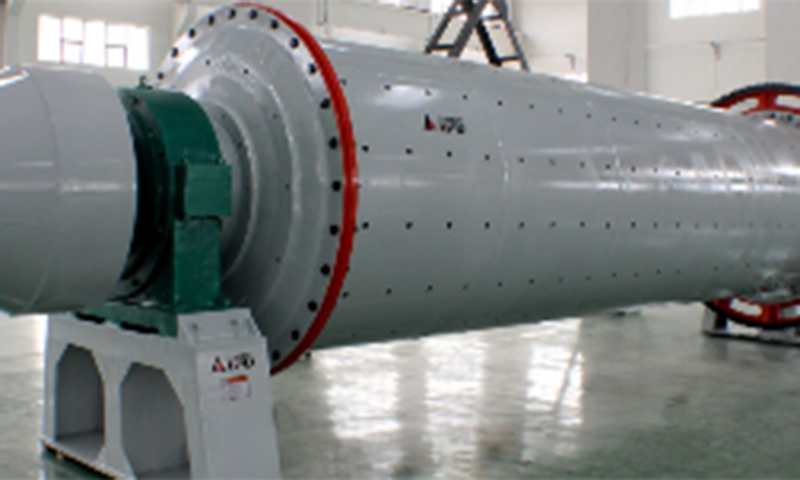
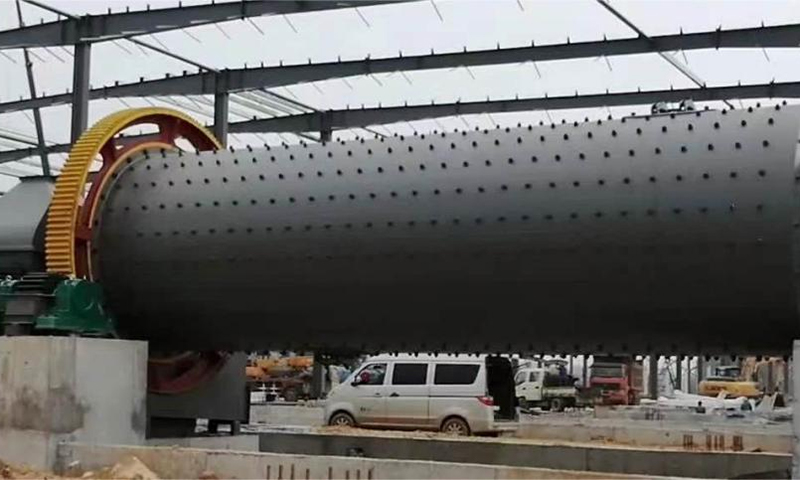
- Closed-loop grinding: An air classifier after the ball mill returns coarse particles for further grinding. The classifier speed is adjusted by a PID loop that targets a Blaine fineness window, avoiding both under-grinding and over-grinding.
- Automatic lime dosing: If the lime silo is equipped with a loss-in-weight feeder and a bulk density sensor, the controller can compensate for density changes without operator intervention.
Typical Impact of Material Prep Stability
| Parameter | Manual Batching | Smart Batching |
|---|---|---|
| Weighing error | +/- 3 to 5 percent | +/- 0.5 to 1 percent |
| Slurry density variation | +/- 4 percent | +/- 1 percent |
| Pre-curing time scatter | 20 to 40 minutes | 5 to 10 minutes |
| Cycles per day | Baseline | + 8 to 12 percent |
If your line still relies on a manual moisture test once per shift and a fixed batching recipe, you are almost certainly losing 5 to 10 percent of your available cycle time. That loss compounds across every mold, every day, and every year of operation.

Bottleneck #2: The Cutting and Pre-Curing Gap That Starves Your Autoclaves
The autoclave is the most expensive equipment in the plant. Every minute it sits idle is a minute of capital and steam capacity wasted. Yet in many factories, the autoclave is not the constraint. The constraint is the uneven flow of green cakes arriving from pre-curing and cutting.
If pre-curing is too short, the cake is too soft to cut cleanly, and waste rises. If pre-curing is too long, the cake hardens and cutting wire breakage increases. Both scenarios slow down the cutting machine, which then delays the transfer of cakes to the autoclave loading area.
Smart Pre-Curing and Cutting Coordination
A smart line replaces fixed timers with closed-loop control based on measured cake hardness or penetration resistance. Steam valves in the pre-curing chamber are modulated to hold temperature and humidity within a narrow window. The PLC decides when the cake is ready, not a wall clock.
The cutting machine and turning table are also linked. When the cutting cycle finishes, the turning table receives the cake without waiting for a manual signal. The autoclave loading crane is dispatched based on the actual completion time of each batch, not a fixed schedule. This synchronization keeps the autoclave utilization above 90 percent in well-designed plants.
Key question: What is your current autoclave utilization rate? If it is below 85 percent, you are burning steam and capital without producing saleable blocks. A smart line typically pushes utilization to 92 to 95 percent.
Bottleneck #3: The Hidden Cost of Reactive Maintenance and Human Error
Unplanned downtime is the silent killer of AAC plant profitability. A mold leaking slurry, a cutting wire breaking repeatedly, or an autoclave door seal failing at 2 a.m. can each cost several hours of production. The cost is not just the lost blocks; it is the reheating of the autoclave, the disruption of the curing schedule, and the overtime wages to catch up.
Most maintenance in conventional plants is reactive. Operators wait for a failure, then repair it. Smart lines shift maintenance from reactive to predictive by monitoring the condition of critical components.
Predictive Maintenance and Centralized Control
- Bearing temperature monitoring: Vibration and temperature sensors on the ball mill, mixer, and cutting machine bearings send data to the PLC. A rising trend triggers an alert before the bearing seizes.
- Wire tension monitoring: The cutting machine controller tracks wire tension. If tension drifts outside the acceptable window, the machine pauses and alerts the operator, preventing a full wire break and cake damage.
- Autoclave door seal monitoring: Pressure differential sensors detect seal leakage during the vacuum and pressure phases. The system logs the leak rate and recommends seal replacement during the next planned stop.
- Centralized control room: Instead of separate operator stations for batching, cutting, and autoclaving, a single control room monitors the entire line. This reduces communication delays and allows one person to coordinate the whole flow.
Measured Impact of Predictive Maintenance in AAC Plants
| Metric | Reactive Maintenance | Predictive Maintenance |
|---|---|---|
| Unplanned downtime per month | 40 to 60 hours | 10 to 20 hours |
| Wire breakage per week | 8 to 12 incidents | 2 to 4 incidents |
| Autoclave door seal life | 3 to 4 months | 6 to 8 months |
| Overall equipment effectiveness | 65 to 75 percent | 85 to 92 percent |
In a Southeast Asian AAC plant, the introduction of condition monitoring and centralized control reduced unplanned downtime by 30 percent within the first six months. The plant did not replace any major machine. It simply connected existing sensors to a smarter control layer.
How to Evaluate a Smart AAC Block Production Line
When comparing suppliers, focus on measurable capabilities rather than marketing claims. The following checklist covers the areas where smart lines differ most from conventional ones.
- Batching accuracy: Can the automatic weighing system hold a tolerance of +/- 1 percent or better for all raw materials?
- Pre-curing control: Does the system record temperature and humidity curves automatically, or does it rely on manual logs?
- Cutting precision: When changing product specifications, can the cutting machine be adjusted in under 30 minutes without manual trial-and-error?
- Data interface: Does the control system provide an MES or cloud data port for future integration with a digital factory platform?
- Energy monitoring: Can the system report steam and electricity consumption per ton or per cubic meter of finished blocks?
- Predictive alerts: Are critical components monitored for temperature, vibration, or tension, with automatic alerts before failure?
- Centralized operation: Can one operator monitor the entire line from a single control station?
Before discussing price, clarify the configuration. The cost of an AAC block machine varies significantly depending on the level of automation, the capacity, and the scope of the control system. A line that appears cheaper upfront may cost more per block over five years due to downtime and waste.
Moving from Bottleneck Management to Throughput Optimization
The three bottlenecks described here do not require a complete plant rebuild to fix. They require a control layer that connects the data already generated by individual machines and uses that data to coordinate the entire flow. The goal is not to buy the most expensive single machine. The goal is to make the whole line behave as one system.
When raw material prep, cutting, pre-curing, and autoclaving are synchronized, the plant reaches its rated capacity and stays there. Waste drops, energy consumption per block falls, and maintenance becomes planned rather than emergency-driven.
If you are evaluating a new AAC block production line or upgrading an existing one, start with a throughput audit. Identify where the flow stops, where material waits, and where operators are making decisions that a controller could make faster and more consistently.
For a capacity calculation based on your specific raw materials and daily target output, contact our engineers. Provide your fly ash or sand characteristics, your target block density, and your available steam capacity. We will provide a de-bottlenecking proposal and a configuration-based cost estimate.
Frequently Asked Questions
Q1: What is the most common bottleneck in an AAC block production line?
The most common bottleneck is inconsistent raw material preparation, particularly moisture variation in sand or fly ash. This causes batching errors, which then cascade into pre-curing and cutting problems. The second most common is the coordination gap between cutting and autoclave loading.
Q2: How does a smart AAC line reduce cycle time?
A smart line reduces cycle time by replacing fixed timers and manual decisions with closed-loop control. Moisture compensation, automatic grinding adjustment, and hardness-based pre-curing control keep each stage within its optimal window, eliminating the safety margins that operators add when they lack real-time data.
Q3: What is a reasonable autoclave utilization rate for a well-run AAC plant?
A well-run plant with synchronized cutting and loading should achieve 90 to 95 percent autoclave utilization. Utilization below 85 percent usually indicates that upstream stages are not delivering cakes on schedule or that the curing cycle is not optimized.
Q4: Can predictive maintenance be added to an existing AAC line?
Yes. Most existing lines already have basic sensors on motors, bearings, and pressure vessels. The upgrade involves connecting these sensors to a PLC or edge gateway, adding software for trend analysis and alerts, and training operators to respond to early warnings. The mechanical equipment does not need to be replaced.
Q5: What information is needed to get an accurate quote for an AAC block production line?
To provide an accurate quote, a supplier needs your target daily output in cubic meters, the type of raw materials available (sand, fly ash, or a mix), the desired block density and strength grade, the level of automation required, and the available space and steam capacity. Without these details, any price estimate is only a rough range.