

 English
 中文简体
中文简体 русский
The Rising Demand for Sustainable Building Materials
The global construction industry faces unprecedented pressure to adopt sustainable practices. Autoclaved aerated concrete (AAC) has emerged as a transformative solution, offering significant advantages over traditional building materials. This lightweight, durable material combines environmental responsibility with exceptional performance characteristics.
Market research indicates that the AAC sector is experiencing robust growth, driven by increasing regulatory requirements for energy-efficient construction and growing awareness among developers and contractors. An AAC block production line represents a substantial investment in meeting this accelerating global demand for green building materials.
Understanding AAC Block Production Technology
AAC production technology represents a sophisticated convergence of chemistry, engineering, and industrial automation. The manufacturing process transforms basic raw materials into a cellular concrete product with exceptional structural and thermal properties.
Core Components of Production Systems
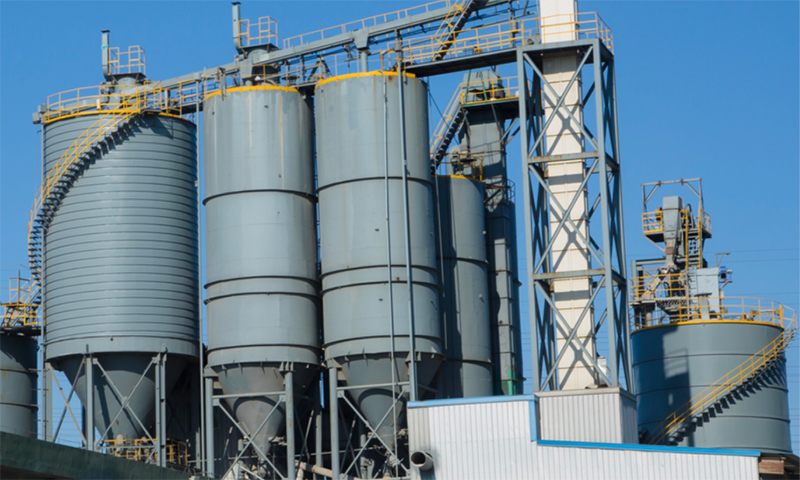
Modern AAC block production lines integrate several critical subsystems working in synchronized harmony:
- Raw material handling and proportioning systems that ensure consistent mix design
- Mixing and aeration units that create the characteristic cellular structure
- Casting and pre-cure stations for initial strength development
- Autoclave chambers operating at elevated temperature and pressure
- Cutting and trimming equipment for precise block dimensions
- Drying and conditioning facilities for final product preparation
- Quality control and testing infrastructure
- Packaging and logistics systems
The Chemical Transformation Process
The production method relies on an elegantly simple yet scientifically precise chemical reaction. Aluminum powder mixed with cement, lime, and silica creates a controlled gas expansion that forms millions of microscopic air cells throughout the material. This cellular structure is what distinguishes AAC from conventional concrete, providing its lightweight characteristics while maintaining structural integrity.
The autoclave stage subjects the formed blocks to steam and pressure, promoting hydrothermal reactions that create calcium silicate hydrate phases. This process dramatically accelerates strength gain compared to conventional curing methods, reducing production time while enhancing long-term durability.
Strategic Advantages of Modern Production Equipment
Operational Efficiency and Throughput
High-capacity AAC block manufacturing equipment delivers impressive production metrics. Contemporary systems can process raw materials and produce finished blocks with throughput rates ranging from 100 to 300 cubic meters of material per day, depending on configuration and operational parameters. This capacity translates directly to revenue generation and market responsiveness.
Economic Performance Indicators
Investment in modern production systems yields compelling financial returns through multiple mechanisms:
- Labor cost reduction through automation of manual operations
- Material efficiency improvements minimizing waste and rejects
- Energy optimization across all production stages
- Premium pricing capability for superior product quality
- Extended equipment lifespan reducing replacement capital expenditure
- Scalability allowing gradual capacity expansion without complete system replacement
Environmental and Sustainability Benefits
AAC production represents a fundamentally more sustainable approach to concrete manufacturing. The process generates minimal waste, as trim waste and rejected material can be recycled directly back into the production cycle. Steam energy, often sourced from integrated facilities, provides highly efficient heat treatment. Modern facilities increasingly incorporate renewable energy sources, further reducing the carbon footprint of produced blocks.
Compared to conventional concrete production, AAC manufacturing consumes significantly less raw material per cubic meter of final product, reflecting the efficiency gains from cellular structure and reduced density requirements.
Technical Specifications and Performance Parameters
Production Capacity Classifications
| Capacity Category | Daily Output (Cubic Meters) | Typical Plant Size | Workforce Requirements |
|---|---|---|---|
| Small-Scale Operation | 50-100 | Compact footprint, modular setup | 15-25 personnel |
| Medium-Capacity Plant | 100-200 | Standard industrial facility | 30-50 personnel |
| High-Capacity Installation | 200-300+ | Large industrial complex | 50-80 personnel |
Product Quality Standards
Modern production facilities maintain rigorous quality control protocols ensuring consistency across multiple dimensions:
- Dimensional accuracy within plus-or-minus 2 millimeters
- Density uniformity across the block cross-section
- Compressive strength meeting or exceeding regulatory specifications
- Thermal conductivity values optimized for building energy performance
- Water absorption characteristics supporting durability in diverse climates
- Acoustic performance through controlled cellular structure
Key Performance Characteristics of AAC Blocks
The material properties of AAC blocks make them particularly attractive for contemporary construction applications:
- Density Range: Typically 400 to 800 kg per cubic meter, compared to 2,400 kg per cubic meter for conventional concrete
- Thermal Conductivity: Excellent insulation properties reducing building energy consumption
- Fire Resistance: Non-combustible material with superior fire ratings compared to conventional masonry
- Workability: Easy to cut, drill, and finish compared to alternative materials
- Sound Dampening: Effective acoustic absorption supporting building comfort standards
- Durability: Excellent resistance to weathering, pest infiltration, and chemical degradation
Global Market Dynamics and Growth Trajectories
Regional Market Expansion
AAC block adoption demonstrates significant variation across global regions, reflecting differences in regulatory frameworks, construction practices, and economic development levels. Established markets in Northern Europe, parts of Asia, and developed regions of the Americas demonstrate mature adoption patterns. Emerging markets across Africa, Southeast Asia, and Eastern Europe present substantial growth opportunities as infrastructure development accelerates and building codes increasingly mandate energy efficiency requirements.
Driver Factors for Market Growth
Multiple converging factors support sustained market expansion:
- Regulatory mandates requiring reduced building energy consumption
- Urbanization trends in developing nations creating massive construction demand
- Rising labor costs making prefabrication and mechanized production economically attractive
- Developer and architect preference for sustainable building materials
- Climate change concerns promoting low-carbon construction solutions
- Improved manufacturing technology reducing production costs
- Enhanced product knowledge among construction professionals
Market Challenges and Considerations
Despite positive growth trends, market participants face several headwinds requiring strategic attention:
- Established competitive advantages of conventional materials in certain applications
- Geographic variations in raw material availability and costs
- Infrastructure investment requirements for new production facilities
- Training and awareness building among construction stakeholders
- Regulatory fragmentation across different jurisdictions
- Supply chain dependencies for specialized equipment and technology
Detailed Production Workflow and Process Optimization
Stage-by-Stage Manufacturing Process
Raw Material Preparation and Quality Control
The production process begins with meticulous preparation of raw materials. Cement, lime, silica sand, and aluminum powder must meet stringent quality specifications. Modern facilities employ sophisticated material handling systems that automatically proportion ingredients according to precise recipes established through quality control protocols. Continuous monitoring ensures consistency across production batches, a critical factor in maintaining product uniformity.
Mixing and Aeration
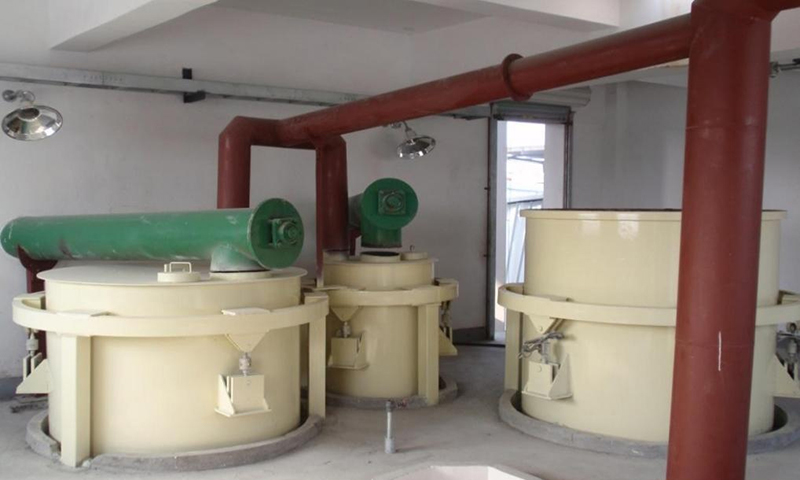
In dedicated mixing chambers, dry materials combine with water and aluminum suspension. The mixing process must achieve complete homogenization while controlling the chemical reaction that generates gas expansion. Modern mixer designs balance these competing requirements, typically completing the mixing phase in five to eight minutes. The aeration reaction produces hydrogen gas, which creates the characteristic cellular structure that defines AAC material properties.
Casting and Initial Set
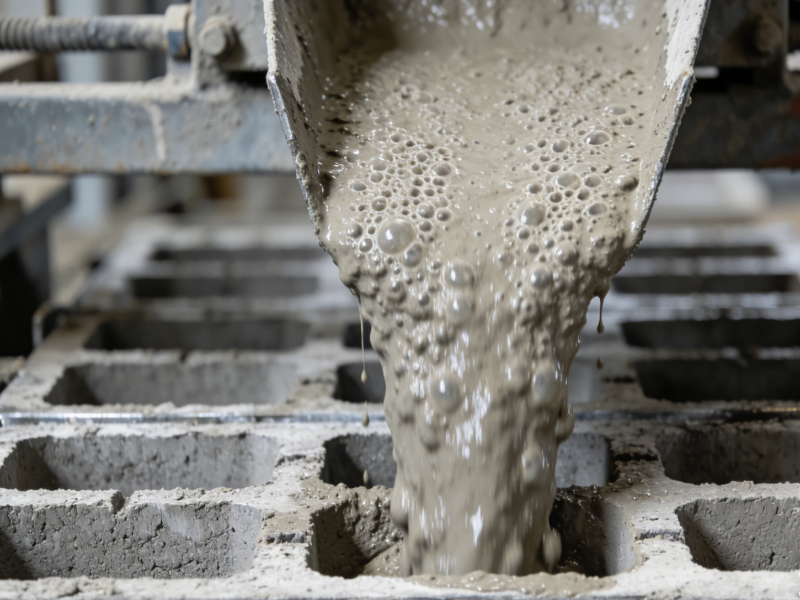
The aerated slurry flows into casting molds positioned on casting beds or pallets. The material continues to expand during the pre-curing period, typically lasting 60 to 90 minutes. During this phase, the material develops sufficient internal strength to support its own weight and withstand handling. Precision timing ensures blocks reach optimal consistency before cutting operations commence.
Cutting and Dimensioning
Specialized cutting equipment, often employing oscillating wire saws or automated guillotines, sections the semi-cured mass into individual blocks of specified dimensions. This stage demands precision and consistency, as dimensional accuracy significantly impacts downstream applications and customer satisfaction. Modern cutting systems employ computerized control systems ensuring repeatable results.
Steam Curing and Strength Development
Freshly cut blocks enter autoclave chambers where elevated temperature (typically 170 to 195 degrees Celsius) and saturated steam pressure accelerate hydrothermal curing reactions. The autoclave cycle typically lasts 8 to 12 hours, during which blocks develop 80 to 90 percent of their ultimate compressive strength. This rapid strength gain represents a fundamental advantage over conventional concrete, enabling efficient production scheduling and rapid product removal from autoclaves.
Cooling and Conditioning
Following autoclave discharge, blocks gradually cool in controlled environments. Proper cooling prevents thermal stress and potential cracking. Stacking configurations and airflow management optimize cooling rates while minimizing product defects.
Final Quality Verification and Packaging
Finished blocks undergo final inspection including dimensional verification, visual assessment, and often compressive strength testing on representative samples. Acceptable products proceed to wrapping and palletization using automated systems, while any substandard units are recycled back into the production stream.
Recent Technological Innovations and Industry Evolution
Automation and Industry 4.0 Integration
Contemporary production facilities increasingly incorporate advanced automation and data analytics. Sensors throughout the production line continuously monitor critical parameters including material temperatures, mixture consistency, density measurements, and curing progression. Real-time data analytics enable process adjustments that optimize production efficiency and product quality. Predictive maintenance systems leverage historical equipment performance data to anticipate maintenance requirements before failures occur, reducing unplanned downtime.
Energy Efficiency Advancements
Modern installations emphasize energy optimization across all production stages. Waste heat recovery systems capture energy from hot gas streams, recycling it for other production processes. Improved autoclave designs minimize steam consumption while maintaining proper curing conditions. Many facilities transition toward energy-efficient drive systems and electric equipment, reducing reliance on fossil fuels and supporting sustainability objectives.
Raw Material Flexibility and Alternative Resources
Advanced production systems demonstrate increasing flexibility in raw material utilization. Industrial byproducts and recycled materials can substitute for conventional ingredients, reducing raw material costs while supporting circular economy principles. Facilities can adjust raw material ratios to produce blocks with varying density and performance characteristics, enabling optimization for specific application requirements.
Digital Traceability and Quality Documentation
Modern systems implement comprehensive digital documentation capturing production parameters for each batch and block. This traceability supports quality assurance, enables rapid problem identification, and provides valuable data for continuous improvement initiatives. Customer transparency regarding product specifications and production conditions enhances trust and supports quality differentiation.
Critical Implementation Considerations for New Facilities
Site Selection and Infrastructure Requirements
Establishing a production facility demands careful attention to multiple infrastructure elements:
- Proximity to reliable raw material sources ensuring supply consistency
- Access to adequate water supplies for production and dust control
- Reliable electrical infrastructure supporting continuous operations
- Steam generation capacity or access to external steam supply
- Transportation infrastructure facilitating product distribution
- Land area sufficient for production buildings, storage, and future expansion
- Environmental compliance considerations including air quality and waste management
Capital Investment and Financial Planning
AAC production facility development represents significant capital investment. Comprehensive financial projections must account for equipment procurement, facility construction, working capital requirements, and contingency reserves. Return on investment typically extends over five to ten years depending on market conditions, production efficiency, and product pricing. Sensitivity analysis addressing variations in raw material costs, energy prices, and product demand enables robust financial planning.
Workforce Development and Operational Expertise
Successful facility operations depend on developing skilled workforce competencies across multiple technical domains. Equipment operators require detailed training in production system operation and troubleshooting. Quality control personnel need expertise in materials testing and specification compliance. Maintenance technicians must understand mechanical and electrical systems across the production line. Manufacturing management requires understanding of production optimization, scheduling, and inventory management. Many equipment suppliers provide comprehensive training programs supporting workforce development.
Quality Management System Implementation
Establishing robust quality management systems ensures consistent product excellence. This typically includes documented standard operating procedures, regular equipment calibration, material testing protocols, and comprehensive training programs. Many facilities pursue formal quality certifications that validate conformance to international standards, supporting customer confidence and market access.
Environmental and Sustainability Advantages
Comparative Environmental Performance
AAC production demonstrates notable environmental advantages compared to conventional cement-based products and alternative building materials. The manufacturing process generates minimal hazardous waste streams. Material efficiency in production, reflected in the low density of finished blocks, means fewer raw materials are required to deliver equivalent structural performance. Energy consumption, particularly in modern facilities emphasizing efficiency, remains lower per unit product compared to numerous alternatives.
Life-Cycle Considerations
Environmental benefits extend beyond the manufacturing phase. The superior thermal properties of AAC blocks reduce operational energy consumption in buildings throughout their service lives. This operational efficiency often offsets manufacturing impacts within several years of building occupancy. End-of-life considerations also favor AAC, as the material is non-toxic, can be safely demolished and recycled, and does not persist as environmental pollutants.
Alignment with Sustainability Certifications
Many construction projects pursue formal sustainability certification programs such as international green building standards. AAC products frequently contribute toward achievement of these certifications through credits related to sustainable materials, energy efficiency, and indoor environmental quality. Manufacturers producing AAC blocks often maintain environmental product declarations and third-party certifications validating their sustainability claims.
Strategic Market Positioning and Competitive Differentiation
Product Quality and Performance Excellence
In competitive markets, product quality and performance consistency represent fundamental differentiation factors. Facilities maintaining rigorous quality control, investing in advanced testing equipment, and pursuing formal certifications establish market credibility. Transparent communication regarding product specifications and performance characteristics supports customer confidence and justifies premium pricing for superior offerings.
Customization and Flexibility Capabilities
Modern production systems enable customization of block dimensions, densities, and performance characteristics to address diverse application requirements. The ability to produce specialty blocks for architectural applications, thermal performance optimization, or specific structural requirements supports market expansion beyond commodity products.
Customer Support and Technical Services
Facilities offering comprehensive technical support services including design consultation, on-site training, and application engineering differentiate themselves from commodity suppliers. Supporting customers in optimizing their use of AAC products through various applications builds long-term relationships and supports market penetration.
Supply Chain Reliability and Logistics Efficiency
In markets where construction timelines are critical, reliable delivery performance and logistics efficiency become key competitive advantages. Facilities maintaining efficient production scheduling, supporting multiple delivery configurations, and providing logistics coordination services address important customer needs.
Future Industry Trends and Market Outlook
Increasing Regulatory Stringency
Building energy codes continue evolving toward increasingly stringent efficiency requirements across developed and developing markets. These regulatory trends consistently favor materials and construction approaches offering superior thermal performance, creating structural tailwinds for AAC adoption. Architects and developers increasingly integrate AAC into their specification frameworks to meet evolving code requirements cost-effectively.
Technological Advancement Trajectories
Production technology will continue advancing along several fronts. Automation and control systems will become increasingly sophisticated, employing artificial intelligence and machine learning to optimize production parameters dynamically. New manufacturing techniques may emerge enabling production of specialized products with enhanced performance characteristics. Integration with renewable energy sources will continue expanding, supporting carbon footprint reduction objectives.
Market Consolidation and Scale Economics
Like many industrial segments, the AAC industry is likely to experience gradual consolidation as larger, more efficient operations gain competitive advantages. However, local and regional production facilities serving specific geographic markets will continue operating given transportation cost considerations and market access requirements. The overall trend favors well-capitalized, professionally managed operations with advanced technology and strong market positioning.
Geographic Market Expansion
Substantial growth opportunities exist in emerging markets where construction activity accelerates, building codes strengthen, and economic development drives demand for efficient, cost-effective building materials. Production facilities establishing operations in high-growth regions position themselves advantageously for long-term market expansion.
Frequently Asked Questions
Q1: What makes AAC blocks superior to conventional concrete blocks?
AAC blocks offer multiple advantages over conventional concrete including significantly lower density, superior thermal insulation properties, excellent fire resistance, and easier workability. The cellular structure provides sound dampening benefits while maintaining structural integrity. Additionally, AAC production generates minimal waste and demonstrates stronger environmental credentials compared to conventional concrete manufacturing.
Q2: What is the typical production capacity of modern AAC facilities?
Production capacity varies significantly based on facility configuration and equipment specifications. Small-scale operations typically produce 50 to 100 cubic meters daily, medium-capacity facilities handle 100 to 200 cubic meters daily, while high-capacity installations can exceed 300 cubic meters daily. Capacity is often expressed in terms of finished block units, with daily production ranging from several thousand to tens of thousands of blocks depending on block size and density specifications.
Q3: How long does the complete production cycle require?
From raw materials entering the facility to finished products leaving in wrapped pallets, the typical production cycle requires 24 to 36 hours. The autoclave curing phase typically consumes 8 to 12 hours, while other stages including mixing, casting, cutting, cooling, and quality verification require the remainder of the time. Efficient scheduling and multi-batch operations enable continuous daily production despite the relatively lengthy individual batch cycle times.
Q4: What raw materials are required for AAC production?
AAC production requires Portland cement, lime, silica sand, aluminum powder, water, and potentially various additives depending on desired product characteristics. The proportions of these basic ingredients may vary based on target density and performance specifications. Modern facilities often experiment with industrial byproducts and recycled materials as ingredient substitutes, improving sustainability while potentially reducing raw material costs.
Q5: What is the typical lifespan and durability of AAC blocks?
AAC blocks demonstrate exceptional durability when properly produced and installed. Structures built with AAC blocks have proven durability exceeding 50 years with minimal degradation. The material resists biological attack, remains stable through freeze-thaw cycles, and does not support mold or pest infiltration. Properly constructed buildings using AAC can reasonably be expected to achieve service lives comparable to or exceeding conventional concrete construction.
Q6: How does AAC production impact the environment compared to conventional concrete?
AAC production demonstrates significantly lower environmental impact compared to conventional concrete manufacturing. The material requires less raw material per unit volume due to its cellular structure and lower density. Production generates minimal waste streams, as trim and rejected material returns to the production cycle. Modern facilities increasingly integrate renewable energy sources and implement efficiency measures reducing operational carbon footprints. The superior building performance enabled by AAC thermal properties provides operational environmental benefits throughout building service lives.
Q7: What investment is required to establish a new AAC production facility?
Capital investment requirements vary based on desired production capacity, facility configuration, and local infrastructure conditions. Small-scale operations may require investments in the range of hundreds of thousands of dollars, while medium to large-capacity facilities typically require multi-million dollar investments. Investment includes land acquisition, facility construction, equipment procurement, initial inventory, and working capital. Comprehensive feasibility studies and financial projections should precede investment decisions.
Q8: How do quality control and testing procedures ensure product consistency?
Modern facilities implement comprehensive quality management systems including continuous process monitoring through multiple sensors, regular material testing, dimensional verification of finished products, and compressive strength testing on representative samples. Many facilities pursue formal quality certifications validating conformance to international standards. Digital documentation systems track production parameters for each batch, enabling rapid problem identification and supporting continuous improvement initiatives.
Q9: Can AAC blocks be customized for specific applications?
Yes, modern production systems enable substantial customization. Blocks can be produced in varying dimensions to address specific construction requirements. Density variations support optimization for different performance objectives, such as enhanced thermal performance or superior sound dampening. Specialty products for architectural applications or performance-intensive requirements can be engineered through adjusted material formulations and production parameters.
Q10: What training and expertise are required for facility operations?
Successful facility operations require developing multidisciplinary workforce competencies. Equipment operators need detailed technical training in production system operation and troubleshooting. Quality control personnel require expertise in materials testing and specification verification. Maintenance technicians must understand mechanical and electrical systems across the complete production line. Manufacturing management requires knowledge of production optimization, inventory management, and quality systems. Most equipment suppliers provide comprehensive training programs supporting workforce development and operational excellence.